
What's Happening?
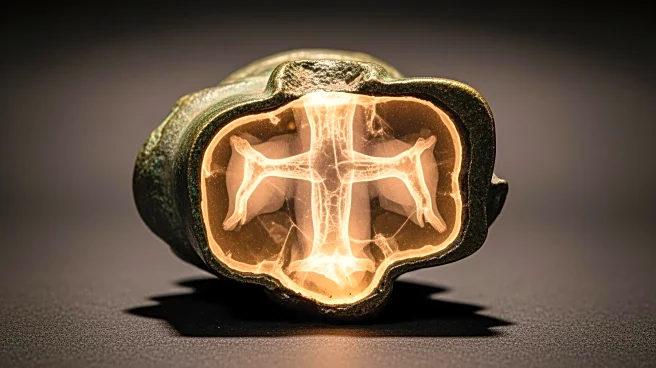
Recent research utilizing modern neutron imaging techniques has uncovered the hidden contents of Tibetan bronze statues, specifically focusing on the Chamma and Fifth Dalai Lama statues. The study, conducted
at the Paul Scherrer Institute, revealed intricate internal structures, including wooden sticks, scrolls, and mani rilbu pills. These sacred pills, traditionally handmade by monks, are believed to aid in healing and fostering compassion. The Chamma statue, crafted in a Bon workshop, features a wooden stick known as 'sog shing' or 'tree of life,' symbolizing spiritual vitality. Wrapped around this stick are scrolls likely containing sacred texts. The Fifth Dalai Lama statue, in contrast, lacks a central stick but contains a cluster of standalone scrolls and mani rilbu pills. These findings provide insights into the religious and cultural significance of these statues, highlighting the meticulous craftsmanship and spiritual symbolism embedded within.
Why It's Important?
The discovery of these hidden contents within Tibetan bronze statues offers significant insights into the religious and cultural practices of Tibetan Buddhism. The use of neutron imaging allows researchers to explore the internal features of these statues without causing damage, preserving their historical and spiritual integrity. This research not only enhances our understanding of Tibetan religious artifacts but also contributes to the broader field of art conservation and historical studies. The findings underscore the importance of advanced imaging techniques in uncovering the complexities of ancient artifacts, providing a deeper appreciation of the cultural heritage and spiritual traditions of Tibet. Additionally, the study highlights the role of sacred objects in religious practices, offering a glimpse into the spiritual beliefs and rituals that have shaped Tibetan culture for centuries.
What's Next?
Future research may focus on applying similar imaging techniques to other religious artifacts, potentially uncovering more about the materials and methods used in their creation. This could lead to a broader understanding of the technological advancements and artistic practices in ancient Tibetan culture. Additionally, the findings may inspire further studies into the spiritual and cultural significance of the objects found within these statues, contributing to a more comprehensive understanding of Tibetan religious traditions. Preservation efforts may also benefit from these insights, as conservators can develop more informed strategies for maintaining the integrity of similar artifacts.
Beyond the Headlines
The use of neutron imaging in this study highlights the intersection of technology and cultural heritage preservation. This approach not only protects the physical integrity of the artifacts but also respects their spiritual significance. The findings may prompt discussions on the ethical considerations of using advanced technology in the study of religious artifacts, balancing the need for scientific inquiry with respect for cultural and spiritual values. Furthermore, the study may influence how museums and cultural institutions approach the display and interpretation of similar artifacts, emphasizing the importance of context and cultural sensitivity.