





What's Happening?
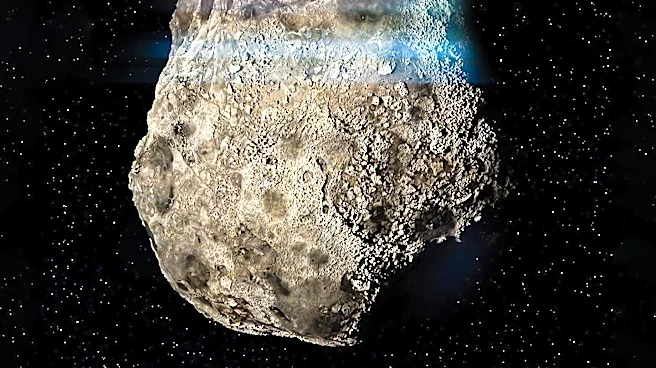
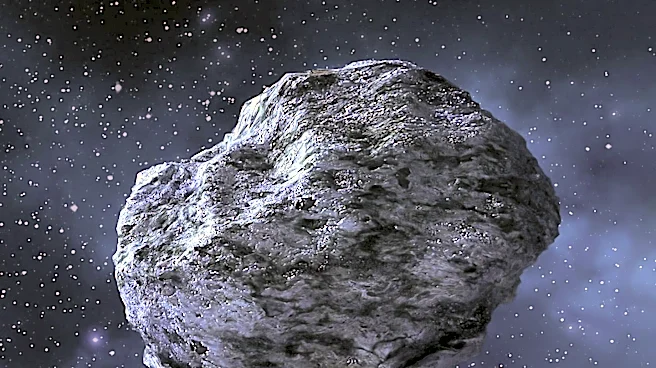
Astronomers have successfully determined the structure of asteroid (44) Nysa, revealing a unique trilobate shape. The asteroid, located at the inner edge of the asteroid belt, is composed of three distinct lobes connected by two necks. This discovery
was made using advanced imaging techniques from the SPHERE instrument on ESO’s Very Large Telescope in Chile and SHARK-VIS on the Large Binocular Telescope in the USA. The findings suggest two possible origins for Nysa's shape: it may have been deformed by collisions or formed from the merger of three separate objects.
Why It's Important?
The discovery of (44) Nysa's unique structure provides valuable insights into the formation and evolution of asteroids in our solar system. Understanding the composition and history of such celestial bodies can enhance our knowledge of planetary formation and the dynamics of the asteroid belt. This research contributes to the broader field of astronomy by challenging existing models and encouraging further exploration of asteroid characteristics.
What's Next?
Further research is needed to confirm the hypotheses regarding Nysa's formation. Astronomers will continue to study the asteroid using various observational techniques to gather more data. This ongoing research may lead to new discoveries about the processes that shape asteroids and their potential impact on planetary science. The findings could also inform future space missions aimed at exploring asteroids and other celestial bodies.