


What's Happening?
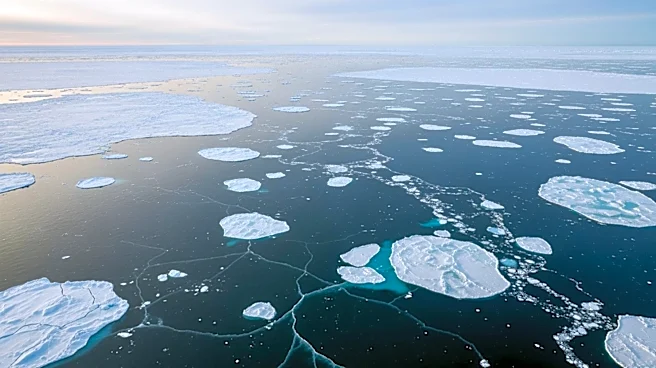
A new study led by geoscientist Michael Rawlins at the University of Massachusetts Amherst reveals significant changes in Arctic water systems due to thawing permafrost. The research, published in Global Biogeochemical Cycles, focuses on Alaska's North
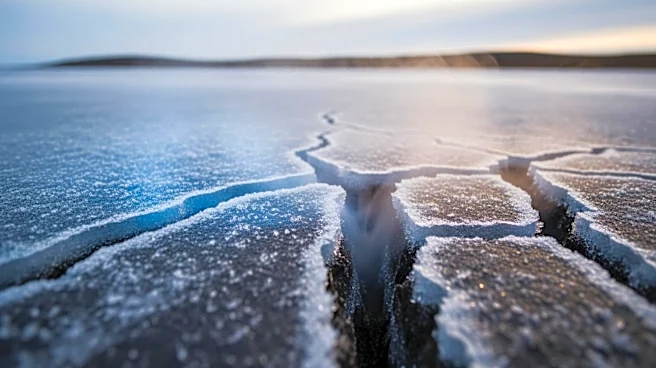
Slope, an area the size of Wisconsin, where rivers and streams are increasingly carrying dissolved organic carbon (DOC) into the Beaufort Sea. Using 44 years of high-resolution model data, the study found that the thaw season is extending into late summer and fall, leading to increased runoff and carbon release. This carbon, once locked in permafrost for thousands of years, is now contributing to global warming as it transforms into carbon dioxide in the ocean.
Why It's Important?
The findings underscore the critical role Arctic rivers play in the global carbon cycle. The Arctic Ocean, which receives a disproportionate amount of river water and carbon, is highly sensitive to these changes. The release of ancient carbon from thawing permafrost creates a feedback loop that exacerbates climate change. This has significant implications for global warming, as increased carbon dioxide levels contribute to rising temperatures. The study highlights the need for more comprehensive land-to-ocean connection studies to better understand and mitigate the impacts of climate change on coastal ecosystems.
What's Next?
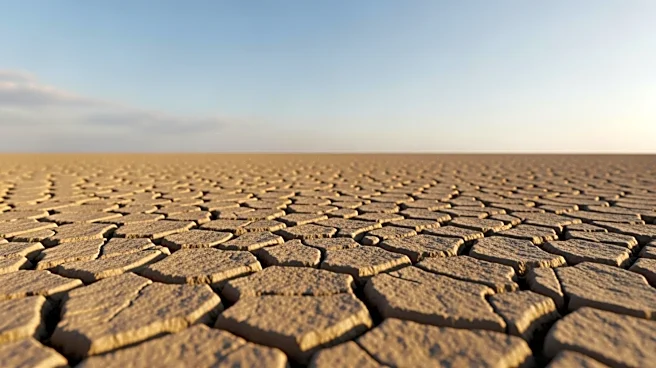
The research suggests that over the next 80 years, the Arctic could see up to 25% more runoff and 30% more subsurface flow, with increasing dryness in southern areas. These changes are likely to affect salinity, nutrient cycles, and food webs in the Beaufort Sea. Further studies are needed to explore how these shifts impact the broader ecosystem and to develop strategies for mitigating their effects. The research team emphasizes the importance of continued monitoring and modeling to address the gaps in understanding the carbon cycle and its implications for global warming.
Beyond the Headlines
The study highlights the ethical and environmental challenges posed by climate change. The release of ancient carbon from permafrost raises questions about humanity's responsibility to address the consequences of global warming. The research also points to the need for international cooperation in climate change mitigation efforts, as the effects of Arctic thawing have global repercussions. Understanding the complex interactions between land, water, and carbon cycles is crucial for developing effective policies to combat climate change.