





What's Happening?
The Office of Personnel Management (OPM) requires authorization for all employment offers extended to current or former political appointees within the Executive Branch. This mandate applies to individuals who have served as political Schedule A, Schedule C,
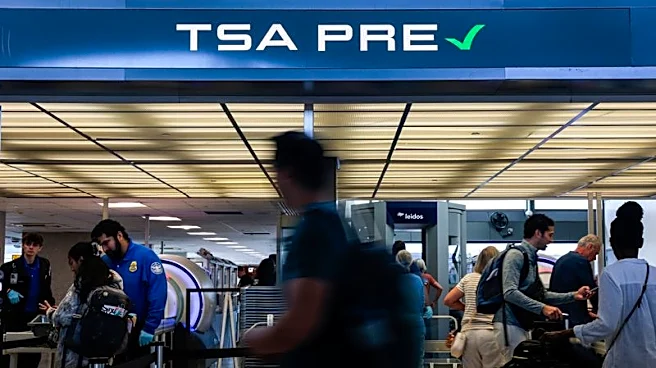
Non-career Senior Executive Service (SES), or Presidential Appointee employees within the last five years. Such individuals must disclose their political appointee status to the Human Resources Office when applying for federal positions. Additionally, OPM has established an Interchange Agreement, which enables most permanent Transportation Security Agency (TSA) employees, who are typically in the Excepted Service, to apply for and be considered for vacancies in Competitive Service agencies. This agreement facilitates broader career opportunities for TSA personnel within the federal government. OPM also outlines a position designation system that evaluates the duties of each role to determine its risk and sensitivity level, which in turn dictates the necessary background investigation. OPM Qualification Standards are publicly available for Administrative and Management Positions, guiding applicants on the requirements for various federal roles.
Why It's Important?
This OPM directive is crucial for maintaining transparency and accountability within the federal hiring process, particularly concerning political appointees. By requiring authorization for their employment offers, OPM aims to prevent potential conflicts of interest or undue influence in federal hiring decisions. The Interchange Agreement for TSA employees is significant as it expands their career mobility, allowing them to transition into a wider array of federal positions that might otherwise be inaccessible due to TSA's Excepted Service status. This can enhance workforce development and retention within the federal government by providing more diverse career paths. The OPM's comprehensive qualification standards and position designation system are vital for ensuring that federal positions are filled by qualified individuals who meet the necessary security and suitability requirements, thereby upholding the integrity and effectiveness of the federal workforce.
What's Next?
Individuals who are current or former political appointees and are seeking federal employment must ensure they disclose their status to the Human Resources Office as part of the application process. Federal agencies, in turn, must adhere to OPM's authorization requirements before extending employment offers to these individuals. TSA employees looking to advance their careers within the broader federal government can leverage the Interchange Agreement to explore opportunities in Competitive Service agencies, requiring them to familiarize themselves with OPM's guidelines. OPM will continue to update its qualification standards and guidance, which applicants and federal agencies will need to monitor to ensure compliance and successful hiring outcomes. The ongoing implementation of these policies will likely lead to a more structured and transparent federal hiring landscape, particularly for those with prior political appointments.
Beyond the Headlines
The OPM's regulations regarding political appointees and the Interchange Agreement for TSA employees reflect a broader effort to professionalize and standardize federal employment practices. The emphasis on transparency for political appointees underscores a commitment to merit-based hiring and reducing the perception of political favoritism. For TSA employees, the agreement acknowledges their valuable experience and provides a pathway for their skills to be utilized across various federal agencies, potentially fostering a more integrated and adaptable federal workforce. These policies also highlight the complex interplay between different federal service classifications (Excepted vs. Competitive) and the continuous efforts by OPM to create more equitable and efficient hiring mechanisms. The detailed qualification standards and risk assessments are foundational to building a competent and trustworthy public service, ensuring that critical government functions are performed by individuals who meet rigorous professional and ethical benchmarks.