





What's Happening?
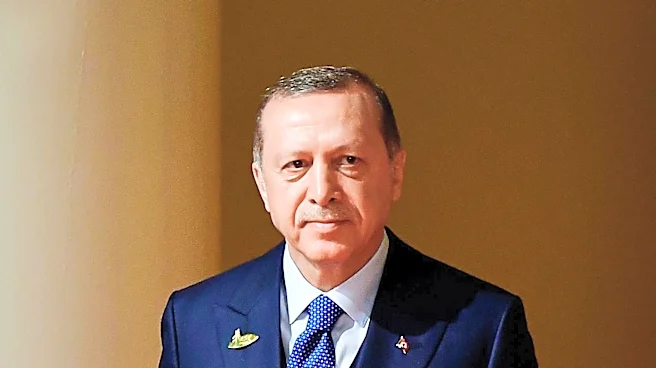
A senior lawmaker from Turkey’s ruling Justice and Development Party (AKP) has indicated that a parliamentary vote to call early elections could pave the way for President Recep Tayyip Erdogan to seek re-election. Turkey's constitution generally limits
presidents to two five-year terms. However, Article 116 of the constitution provides an exception: if parliament initiates early presidential and parliamentary elections during a president's second term, the incumbent is permitted to run for another term. President Erdogan was elected under Turkey's current executive system in 2018 and secured his second term in 2023. The AKP has previously argued that his 2018 victory marked his first term under the executive presidency, which was established after a 2017 constitutional referendum. This interpretation was accepted by Turkey’s Supreme Election Board in 2023, allowing Erdogan to run for re-election then. For President Erdogan to run again under this constitutional exception, parliament would need to vote to advance both presidential and parliamentary elections before his current term concludes. The AKP and its ally, the Nationalist Movement Party (MHP), currently lack the 360 votes required for such a decision and would need support from other parties.
Why It's Important?
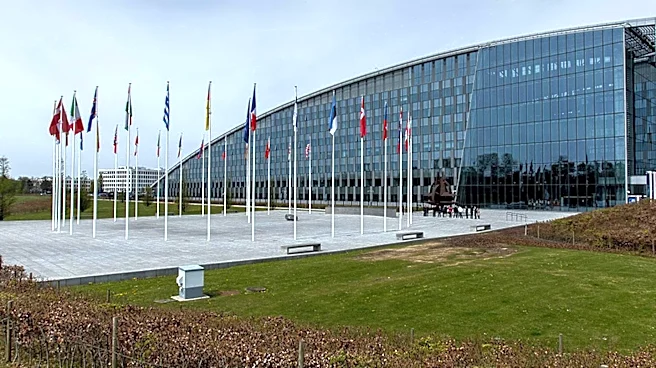
This development is significant as it highlights ongoing efforts within Turkey's ruling alliance to potentially extend President Erdogan's tenure beyond the conventional two-term limit. The constitutional maneuver, if successful, could solidify President Erdogan's long-term political influence and leadership in Turkey. For the U.S. and its allies, a prolonged Erdogan presidency could mean continuity in Turkey's foreign policy and domestic agenda, which has often been characterized by a more independent stance on international issues and a focus on national interests. This could impact NATO dynamics, given Turkey's strategic importance, and influence regional stability in the Middle East and Eastern Europe. Businesses and investors, both domestic and international, might view this as either a source of stability or a concern regarding democratic checks and balances, potentially affecting economic confidence and foreign direct investment in Turkey. The debate over constitutional interpretation also underscores the ongoing political polarization within Turkey, with opposition parties and some legal experts challenging the AKP's interpretation of term limits.
What's Next?
The immediate next step would involve the AKP and MHP attempting to garner the necessary 360 votes in parliament to call for early presidential and parliamentary elections. This would require significant political negotiation and potentially concessions to other parties. If a parliamentary vote for early elections is secured, President Erdogan would then be eligible to run for another term. Senior figures in President Erdogan's ruling alliance have already begun discussing potential dates for these early elections, with one legal adviser proposing April 16, 2028, as a possibility. President Erdogan himself has recently described Turkey's next elections as 'approaching,' further fueling speculation about an early poll. Concurrently, the AKP is reiterating its call for a new, civilian constitution, though it has not explicitly stated whether such a constitution would alter or remove presidential term limits. The outcome of these political maneuvers will determine the future leadership landscape of Turkey and its implications for both domestic and international relations.
Beyond the Headlines
The discussion around President Erdogan's potential re-election through a parliamentary vote on early elections delves into deeper questions about democratic norms and constitutional interpretation in Turkey. While the constitutional provision exists, its application in this context raises concerns among critics about the spirit of term limits and the concentration of power. The ongoing debate reflects a broader struggle over the nature of Turkey's political system, particularly since the shift to an executive presidency in 2017. The call for a new, civilian constitution, while presented as a move towards modernization, could also be seen as an opportunity to further entrench the current political structure or address the term limit issue. This situation highlights the delicate balance between legal provisions and democratic principles, and how they are interpreted and applied by ruling parties. The international community, including the U.S., will likely observe these developments closely, as they could have long-term implications for Turkey's democratic trajectory and its role on the global stage.