




What's Happening?
The UN Refugee Agency (UNHCR) has issued a stark warning that nearly 90 million forcibly displaced people, representing three-quarters of the global total, reside in countries highly susceptible to climate hazards. This announcement comes just days before
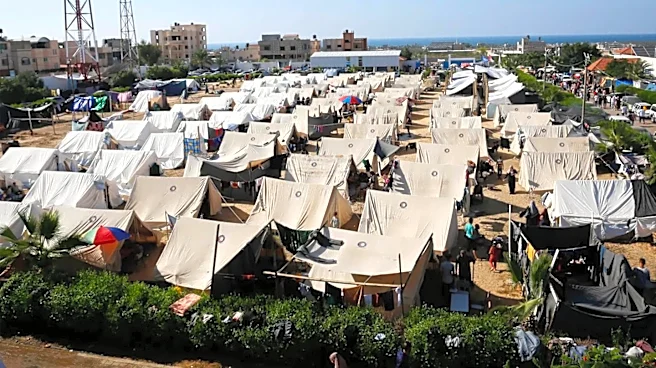
the COP31 climate summit in Turkey. According to UNHCR, these individuals are facing a 'double injustice,' having been forced from their homes by conflicts they did not cause, only to now confront the severe impacts of a climate crisis to which they have contributed minimally. The agency highlights that droughts, floods, and extreme heat are not only threatening the lives of these displaced populations but also making it increasingly difficult to find lasting solutions for their displacement. More than two-thirds of refugees who returned home in the first half of this year went back to countries highly vulnerable to climate hazards. For instance, in Syria, where nearly four million displaced people have recently returned, declining groundwater and climate shocks are impeding recovery efforts. The UNHCR also noted that only about 10% of global climate finance is directed towards fragile and conflict-affected countries, despite these nations hosting a large proportion of climate-exposed displaced people.
Why It's Important?
This report underscores a critical intersection between humanitarian crises and climate change, revealing that the world's most vulnerable populations are disproportionately affected by environmental degradation. The lack of adequate climate finance reaching these fragile states exacerbates their inability to adapt to climate impacts, trapping displaced communities in a cycle of vulnerability. The situation creates significant challenges for international aid organizations and governments striving to provide humanitarian assistance and facilitate sustainable returns. The 'double injustice' faced by refugees—fleeing conflict and then confronting climate change—highlights a systemic failure to protect those most at risk. This dynamic can lead to prolonged displacement, increased humanitarian needs, and potential destabilization in already fragile regions. The economic and social costs associated with repeated displacement due to climate events place immense strain on host countries and international resources, making effective climate action and equitable resource allocation crucial for global stability and human security.
What's Next?
Ahead of the COP31 climate summit in Turkey, the UNHCR plans to advocate for governments and climate finance institutions to integrate refugees and other displaced populations into national climate plans and financing mechanisms. The agency will call for increased funding and targeted strategies to support these vulnerable communities in adapting to climate change and building resilience. The summit will serve as a crucial platform for international discussions on how to address this growing crisis, potentially leading to new commitments or frameworks for climate action that specifically include displaced populations. Furthermore, the UNHCR's projections, such as one in three refugee settlements in sub-Saharan Africa potentially facing 100 or more days of dangerous heat annually by 2050, suggest an urgent need for long-term planning and investment in climate-resilient infrastructure and early warning systems in affected regions. The international community's response at COP31 and beyond will be critical in determining the future well-being and stability of millions of displaced individuals.
Beyond the Headlines
The UNHCR's warning extends beyond immediate humanitarian concerns, touching upon deeper ethical and systemic issues. The disproportionate impact of climate change on populations least responsible for it raises questions of climate justice and global equity. The current allocation of climate finance, with only 10% reaching the most vulnerable countries, highlights a significant gap in international cooperation and responsibility. This disparity not only hinders adaptation efforts but also perpetuates cycles of poverty and instability, potentially fueling future conflicts and displacement. The report also implicitly challenges the traditional separation of humanitarian aid and climate action, suggesting that these two fields must be more closely integrated to address the complex realities faced by displaced populations. A failure to address these interconnected crises could lead to a future where climate-induced migration becomes a dominant global challenge, requiring a fundamental rethinking of international law, human rights, and global governance structures.