



What's Happening?
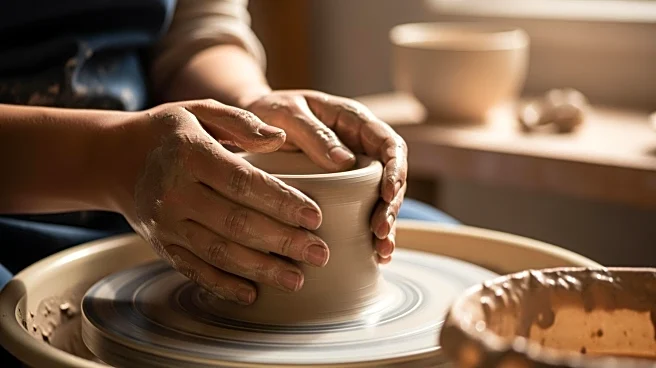
The Chicago Park District's Athletic Field Ceramics Building in Irving Park is hosting a 13-week ceramics course designed for Deaf, hard of hearing, blind, and visually impaired individuals. This program, which runs three times a year, provides a professionally
equipped space for participants to engage in ceramics. Tim Owens, a program and event coordinator, focuses on translating for Deaf and hard of hearing participants, while his colleague Sheena Hager specializes in working with the blind and visually impaired. The course is led by ceramics instructors Peter Ronan and Johnathon Kusner, who, despite not being professionally trained, offer hands-on guidance to help participants explore their creativity. The course does not follow a set curriculum, allowing participants to bring their own ideas and projects to life.
Why It's Important?
This initiative is significant as it provides an inclusive environment for individuals with disabilities to engage in artistic expression, fostering a sense of community and belonging. By offering specialized support and a flexible curriculum, the program empowers participants to explore their creativity without the constraints of traditional learning methods. This approach not only enhances the participants' artistic skills but also promotes social interaction and personal growth. The program highlights the importance of accessibility in the arts, encouraging other institutions to adopt similar inclusive practices.
What's Next?
The continuation and potential expansion of this program could inspire other cities to implement similar initiatives, promoting inclusivity in the arts nationwide. As awareness of the program grows, it may attract more participants and possibly lead to additional funding or resources to enhance the offerings. Stakeholders, including local government and community organizations, may take interest in supporting or replicating the program to further promote accessibility and inclusivity in various fields.
Beyond the Headlines
The program's success could lead to broader discussions about the role of art in therapy and rehabilitation for individuals with disabilities. It may also influence policy changes regarding accessibility standards in public programs and facilities. By demonstrating the positive impact of inclusive art programs, the initiative could encourage more widespread adoption of similar practices, ultimately contributing to a more inclusive society.