








What's Happening?
Researchers at the University of California, Los Angeles (UCLA) Health Sciences have discovered that creatine, a supplement commonly used by gym-goers, may play a significant role in enhancing the immune system's ability to recognize and attack cancer.
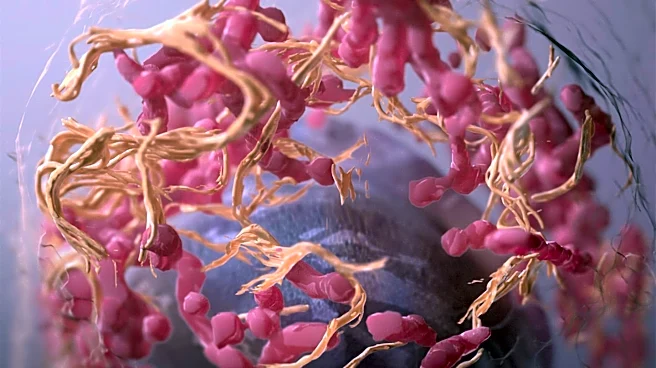
The study, led by James Elsten-Brown, involved experiments on mice and human cells, revealing that creatine could help immune cells, particularly dendritic cells, function more effectively against tumors. These cells are crucial in activating T cells, which are responsible for identifying and destroying cancer cells. The study found that when creatine was available, both dendritic and T cells were more effective in attacking tumors. The research suggests that creatine could potentially support the immune response that modern cancer immunotherapies depend on.
Why It's Important?
The findings from UCLA could have significant implications for cancer treatment, particularly in enhancing the effectiveness of immunotherapies. Currently, only 20 to 40 percent of patients benefit significantly from these treatments. By potentially boosting the function of dendritic cells, creatine could improve the overall immune response against cancer, making immunotherapies more effective. This could lead to better outcomes for cancer patients, particularly those with melanoma, which is expected to affect over 100,000 people in the U.S. in 2026. The study opens up new avenues for research into dietary supplements as adjuncts to cancer treatment, potentially offering a simple and cost-effective way to enhance existing therapies.
What's Next?
Further research is needed to confirm these findings in clinical settings. The current study was conducted in mice and human cells in the lab, so clinical trials involving cancer patients will be necessary to determine if creatine supplementation can indeed improve treatment outcomes. Researchers will need to explore the appropriate dosages and methods of administration to ensure that creatine is effectively utilized by the immune cells in the tumor environment. If successful, this could lead to new guidelines for the use of creatine in cancer care, potentially transforming how immunotherapies are administered.