






What's Happening?
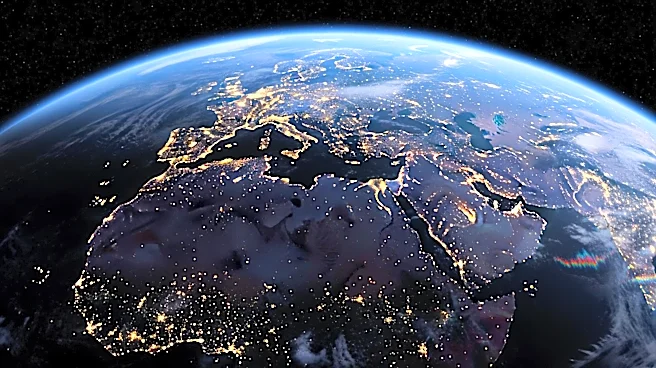
NASA's new nighttime maps, based on satellite imagery, are providing insights into global energy transitions and volatility. The study, led by researchers at the University of Connecticut, analyzed 1.16 million satellite images collected over nine years.
The findings highlight significant changes in artificial lighting, with intense flaring observed over major U.S. oil and gas fields, such as the Permian Basin and Bakken Formation. The imagery reveals cycles of industrial activity, including gas flaring, which releases carbon dioxide and soot. The data, accessible through NASA's Black Marble product suite, is being used to track energy movements and inform national security interests.
Why It's Important?
The ability to monitor energy transitions and industrial activities in near real-time has significant implications for economic and environmental policy. The data can help identify inefficiencies, such as gas flaring, which represents wasted resources and environmental harm. By making this information publicly available, NASA is enabling stakeholders, including policymakers and environmental groups, to make informed decisions. The insights gained from this imagery can drive efforts to improve energy efficiency and reduce emissions, contributing to global climate goals. Additionally, understanding energy dynamics is crucial for national security, as it affects economic stability and geopolitical relations.
Beyond the Headlines
The study challenges the assumption that global development leads to uniformly brighter nights. Instead, it reveals a complex picture of industrial booms and busts, policy-driven changes, and energy conservation efforts. The data shows that while some regions have brightened, others have dimmed due to energy-efficient technologies and economic restructuring. This nuanced understanding of global lighting patterns can inform urban planning and energy policy, promoting sustainable development. The research also highlights the role of advanced satellite technology in providing critical environmental data, underscoring the importance of continued investment in space-based observation systems.