
What's Happening?
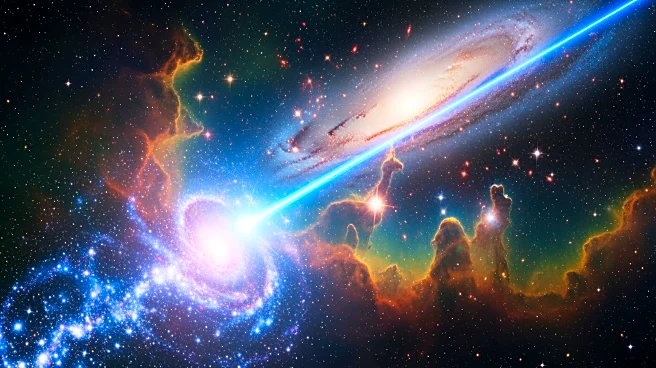
Researchers at the University of Waterloo have discovered the farthest jellyfish galaxy ever observed using the James Webb Space Telescope (JWST). This galaxy, located at a redshift of z = 1.156, has its light traveling for 8.5 billion years to reach
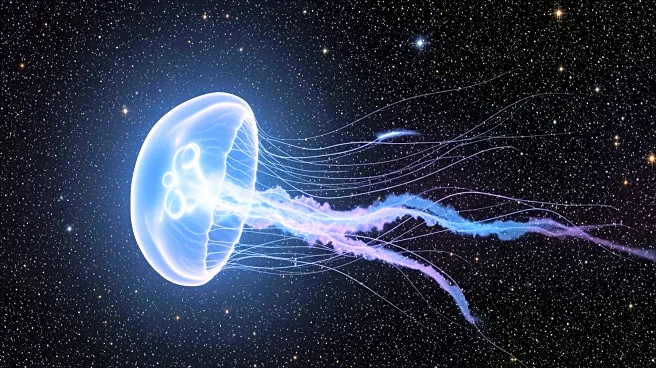
Earth, providing a glimpse into the universe's past. Jellyfish galaxies are characterized by long streams of gas trailing behind them, a result of ram-pressure stripping as they move through galaxy clusters. The discovery challenges previous assumptions about galaxy clusters in the early universe, suggesting that such environments were already capable of stripping galaxies and altering their properties.
Why It's Important?
The discovery of this jellyfish galaxy offers significant insights into the conditions of the early universe, particularly regarding galaxy evolution and the role of galaxy clusters. It suggests that galaxy clusters were more developed and influential in shaping galaxies earlier than previously thought. This finding could reshape our understanding of how dense cosmic environments impacted galaxy formation and evolution billions of years ago. The presence of young stars in the trailing gas streams also provides evidence of star formation outside the main galaxy body, a phenomenon associated with ram-pressure stripping.
What's Next?
Researchers plan to apply for additional observing time with the JWST to study this galaxy in greater detail. Further research could confirm these findings and provide more comprehensive insights into the processes that shaped galaxies in the early universe. This could lead to a better understanding of the formation of the large population of 'dead' galaxies observed in galaxy clusters today.