




What's Happening?
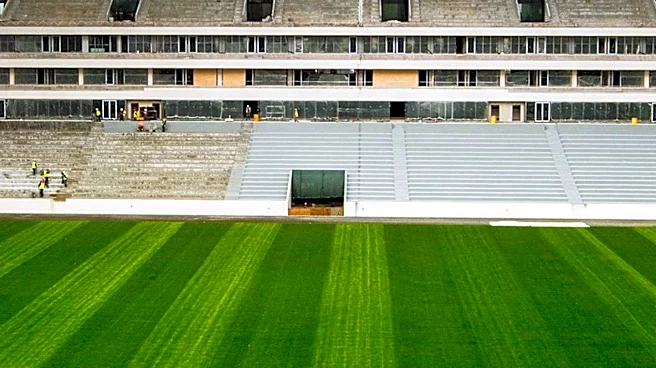
The San Juan Unified school board has approved an $8 million stadium improvement project for Rio Americano High School. The decision, made with a 6-1 vote, greenlights plans to install permanent stadium lights at the school. This approval comes despite
opposition from environmental advocates who have raised concerns about the potential impact of the new lighting on nearby wildlife. The project aims to enhance the athletic facilities at Rio Americano High School, providing improved infrastructure for sports events and other school activities. The board's vote indicates a prioritization of facility upgrades, balancing community needs with environmental considerations that were brought forward during the discussion.
Why It's Important?
This decision highlights the ongoing tension between community development projects and environmental preservation in local governance. The approval of permanent stadium lights, despite environmental objections, sets a precedent for how the San Juan Unified school board weighs such competing interests. For the school and its students, the upgrades mean enhanced athletic programs and potentially more evening events, improving the overall student experience. However, for environmental groups, it represents a potential setback in protecting local wildlife, raising questions about the long-term ecological impact of increased light pollution and human activity in sensitive areas. This outcome could influence future development proposals in the district, particularly those that might affect local ecosystems, and may prompt environmental advocates to intensify their efforts in similar situations.
What's Next?
Following the school board's approval, the San Juan Unified School District will proceed with the planning and implementation phases of the $8 million stadium improvement project at Rio Americano High School. This will involve detailed design work, securing necessary permits, and eventually construction. Environmental advocates who opposed the project may explore further avenues to mitigate the impact on wildlife, such as advocating for specific lighting technologies or operational restrictions, though the primary decision has been made. The community will likely monitor the construction process and any subsequent environmental assessments. The project's completion will bring new facilities to the high school, potentially increasing its capacity for evening events and sports activities.
Beyond the Headlines
The debate surrounding the Rio Americano stadium upgrades touches upon broader issues of urban development and ecological responsibility. The installation of permanent stadium lights, while beneficial for school activities, contributes to light pollution, which has documented adverse effects on nocturnal wildlife, disrupting their navigation, foraging, and reproductive cycles. This decision underscores the challenge local authorities face in balancing immediate community benefits with long-term environmental sustainability. It also highlights the need for comprehensive environmental impact assessments and mitigation strategies in urban planning, especially in areas adjacent to natural habitats. The outcome may prompt a re-evaluation of environmental protection policies within school districts and local governments, encouraging more proactive measures to safeguard biodiversity in developing areas.