



What's Happening?
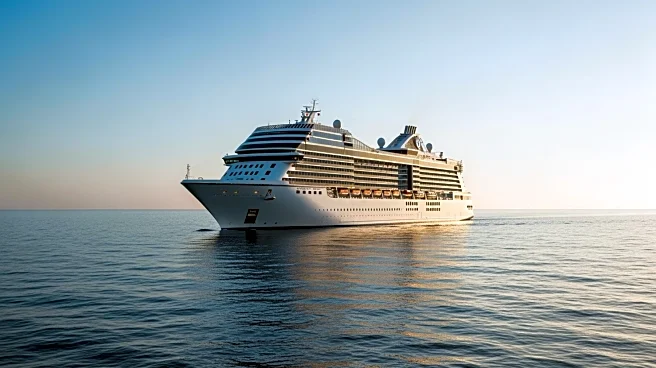
China has launched its second large domestically built cruise ship, the Adora Flower City, marking a significant step in expanding its domestic cruise industry. Built for Adora Cruises, the ship is an enlarged version of the first ship, Adora Magic City, and is set
to enter service this year. The Adora Flower City boasts a gross tonnage of 141,900 and a length of 341 meters, offering increased passenger capacity and enhanced amenities compared to its predecessor. The ship features 2,130 passenger cabins, 26 restaurants and bars, a theater, a gym/spa, and an enlarged shopping mall. The design incorporates a flower theme, reflecting its association with Guangzhou, known as the Flower City. Adora Cruises has also signed a memorandum of understanding with China State Shipbuilding Corporation to design and construct two additional cruise ships, with an option for a third. The new ships will be of Chinese design, with the first expected to be delivered by 2030.
Why It's Important?
The launch of the Adora Flower City underscores China's ambition to become a major player in the global cruise industry. By expanding its fleet and enhancing its cruise offerings, China aims to attract more international tourists and boost its tourism sector. The development of domestically built cruise ships also highlights China's growing capabilities in shipbuilding and its strategic focus on the maritime industry. This expansion could lead to increased competition in the global cruise market, challenging established players and potentially driving innovation and improvements in cruise experiences worldwide. Additionally, the focus on incorporating Chinese culture into the cruise experience may appeal to both domestic and international travelers seeking unique cultural experiences.
What's Next?
The Adora Flower City is scheduled to begin sea trials in May and is expected to be delivered in late 2026. It will be homeported at the Guangzhou Nansha International Cruise Home Port, near Hong Kong. As Adora Cruises continues to expand its fleet, the company plans to accelerate its operations in international markets, potentially establishing overseas homeports. This expansion could lead to increased tourism and economic opportunities for regions hosting these new homeports. The success of these initiatives will depend on the company's ability to attract international passengers and compete with established cruise lines.