



What's Happening?
A new study published in Nature Geoscience indicates that the Arctic should be understood as three distinct 'regimes' rather than a single entity when analyzing cloud-forming aerosols. Researchers from the University of Helsinki's Institute for Atmospheric
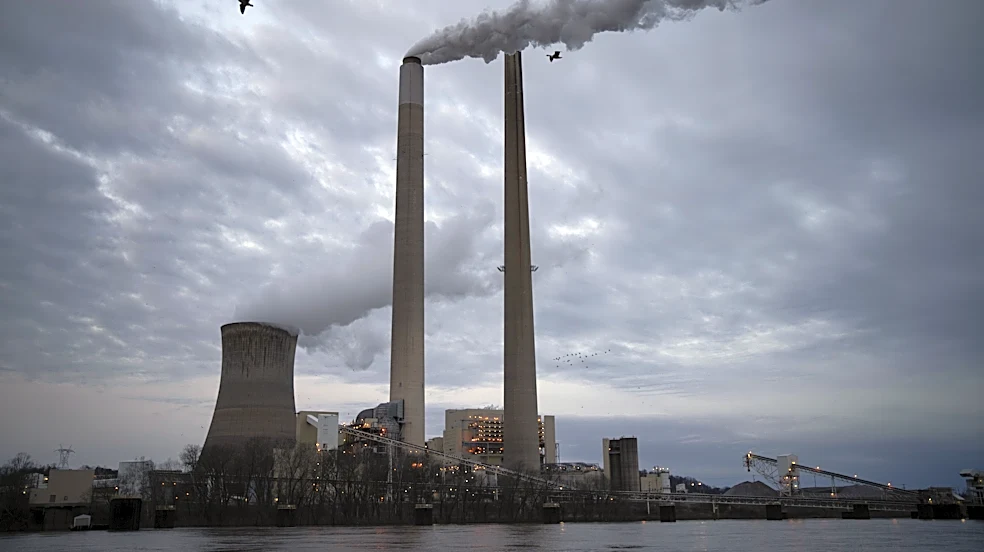
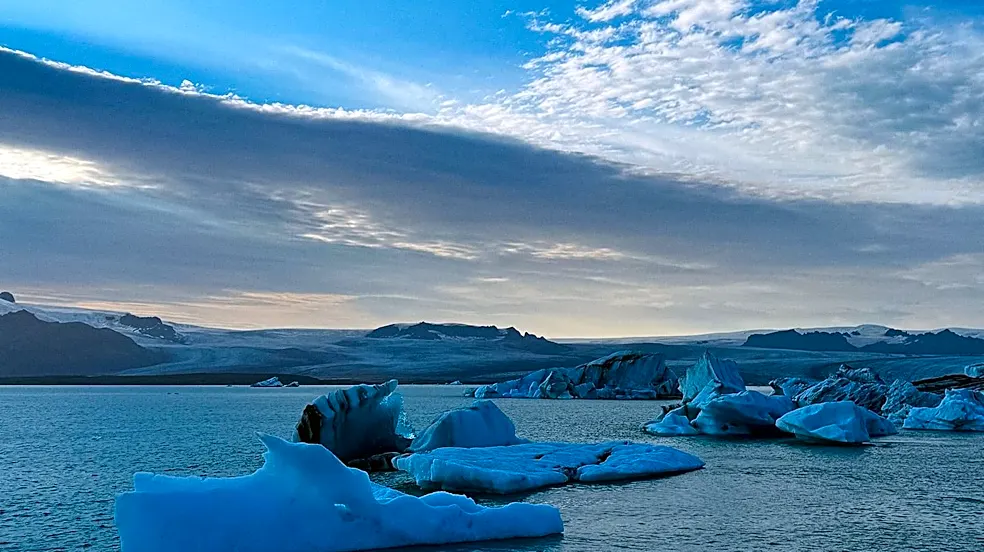
and Earth System Research (INAR), in collaboration with other institutes including the Finnish Meteorological Institute, found that the creation of cloud condensation nuclei (particles on which water vapor condenses) varies significantly across the High Arctic, Maritime Arctic, and Continental Arctic. The study, based on over 20 years of aerosol size distribution data from eight measuring stations and research expeditions, suggests that as the climate warms, naturally formed aerosols are likely to increase in the ice-covered High Arctic. Conversely, a decline is anticipated in the open waters of the Maritime Arctic. In the Continental Arctic, the outcome is less dependent on global warming and more on future changes in human-generated air pollution. This research highlights the complexity of aerosol-cloud interactions in the Arctic, a region warming nearly four times faster than the global average.
Why It's Important?
This study is crucial for understanding the future climate of the Arctic and its global implications, directly impacting U.S. climate science and policy. Clouds in the Arctic play a significant role in the region's energy balance, influencing how much solar radiation is reflected or absorbed, which in turn affects ice melt and global sea levels. The finding that aerosol formation varies across distinct Arctic regimes means that climate models need to be more nuanced and regionally specific to accurately predict future warming trends and their consequences. For the U.S., which has significant Arctic interests and research initiatives, this research provides critical data for refining climate projections, assessing environmental impacts, and informing adaptation strategies for coastal communities and infrastructure. Understanding these regional differences is vital for developing effective policies related to emissions control and for predicting changes in weather patterns that can affect U.S. agriculture, shipping routes, and national security interests in the Arctic.
What's Next?
The findings of this study will likely prompt further research into the specific mechanisms driving aerosol formation and cloud dynamics within each of the identified Arctic regimes. Climate scientists and modelers will need to incorporate these regional distinctions into their models to improve the accuracy of Arctic climate predictions. This could lead to more targeted observational campaigns and the deployment of specialized measuring equipment in the High Arctic, Maritime Arctic, and Continental Arctic to gather more detailed data on aerosol-cloud interactions. Policymakers, particularly in nations with Arctic territories like the U.S., may use this enhanced understanding to refine environmental regulations and climate adaptation strategies. The study also underscores the need for continued long-term aerosol monitoring at northern locations, which will be essential for validating and improving future climate projections and understanding the long-term impacts of a warming Arctic.
Beyond the Headlines
Beyond its immediate scientific implications, this study highlights a deeper challenge in climate science: the need for highly localized and nuanced understanding of complex atmospheric processes. The revelation that the Arctic is not a monolithic entity in terms of aerosol-cloud interactions suggests that broad-stroke climate policies may be insufficient for effective environmental management in rapidly changing regions. This could lead to a paradigm shift in how climate change is studied and addressed, moving towards more granular, region-specific approaches. Ethically, it underscores the responsibility of nations to invest in detailed scientific research to fully comprehend the intricate feedback loops within the Earth's climate system, especially in vulnerable areas like the Arctic. The technical difficulties in measuring nanoparticles in harsh Arctic conditions also point to the ongoing need for technological innovation in environmental monitoring, which could have broader applications in other challenging environments globally. This research serves as a reminder that climate solutions must be as complex and varied as the climate system itself.