






What's Happening?
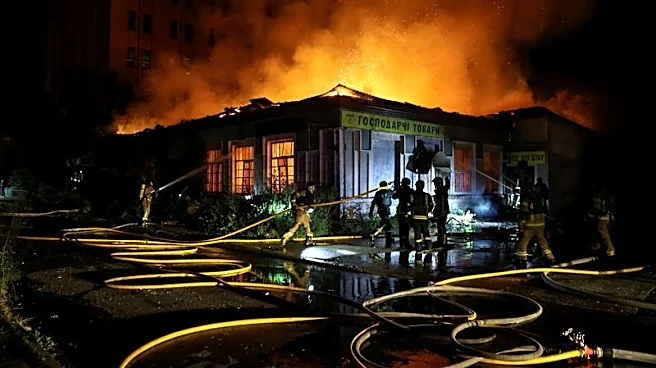
President Zelensky has confirmed a drone strike on Russia's Perm oil refinery, located approximately 1,500 kilometers (930 miles) from Ukraine. Videos shared by the Ukrainian Telegram channel Exilenova+ reportedly show explosions and a fire at the facility.
OSINT analysts from ASTRA, an independent Russian Telegram channel, geolocated footage depicting smoke rising near the Lukoil-Permnefteorgsintez oil refinery. Local residents reported a series of explosions. Authorities in Perm issued warnings about incoming unmanned aerial vehicles (UAVs) and temporarily restricted operations at Bolshoe Savino airport, which have since been lifted. President Zelensky stated on Telegram that Ukraine continues to use its long-range sanctions to bring the consequences of the war back to its origin. Russia’s Defense Ministry claimed its air defenses shot down 325 Ukrainian drones overnight.
Why It's Important?
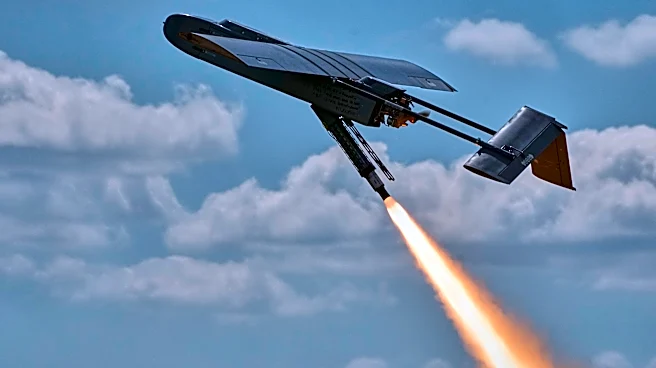
The drone attack on the Perm oil refinery signifies Ukraine's continued strategy of targeting Russian energy infrastructure, aiming to disrupt Russia's war economy and its capacity to fund military operations. Such strikes, even if partially successful, can create significant logistical challenges for Russia, potentially impacting fuel supplies for both military and civilian use. The long-range nature of this attack demonstrates Ukraine's evolving drone capabilities and its intent to project power deeper into Russian territory. This could escalate tensions and prompt further retaliatory actions from Russia, potentially leading to a cycle of infrastructure targeting. For the U.S. and its allies, these developments underscore the ongoing volatility of the conflict and the potential for broader economic and geopolitical ramifications, particularly concerning global energy markets.
What's Next?
Following the confirmed drone strike, Russia is likely to intensify its air defense measures around critical infrastructure, including other oil refineries and strategic sites. Ukraine may continue to employ long-range drone attacks as a key component of its defense strategy, seeking to degrade Russia's industrial and military capabilities. The international community will be closely monitoring the impact on global oil prices and supply chains, as disruptions to Russian energy production can have ripple effects worldwide. Further retaliatory actions from Russia against Ukrainian cities and infrastructure are also a strong possibility, potentially leading to an escalation of hostilities and increased humanitarian concerns. The effectiveness of Russia's air defenses against these evolving drone threats will be a critical factor in determining the future trajectory of such attacks.
Beyond the Headlines
The targeting of Russian oil refineries by Ukrainian drones highlights a shift in modern warfare, where economic infrastructure becomes a direct battleground. This strategy, while aimed at weakening an adversary, also raises questions about the broader implications for civilian populations and the environment, given the potential for industrial accidents. The use of long-range drones by Ukraine underscores the increasing accessibility and effectiveness of asymmetric warfare tactics, allowing nations with fewer conventional resources to strike at the heart of a larger power. This trend could reshape future military doctrines and defense spending, emphasizing the need for robust air defense systems against drone threats. Furthermore, the attacks could exacerbate global energy market instability, influencing international relations and the effectiveness of existing sanctions against Russia.