




What's Happening?
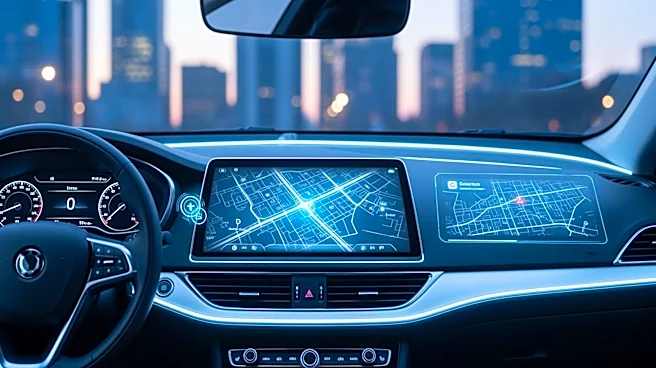
Tesla is seeking approval for its Full Self-Driving (FSD) technology in the European Union. The Dutch road authority RDW has issued a provisional approval for the technology, allowing its use on Dutch roads. This approval is a significant step in Tesla's
strategy to gain broader acceptance across the EU. The FSD technology, while not fully autonomous, allows vehicles to steer, turn, and accelerate under human supervision. Tesla is pursuing an exemption under Article 39 of Europe's motor vehicle approval law, which allows for new technologies not covered by existing rules. The European Commission and other authorities are involved in the approval process, with a key meeting scheduled in Brussels. The approval requires a 'qualified majority' vote from EU member states, representing 65% of the bloc's population.
Why It's Important?
The approval of Tesla's FSD technology in the EU could significantly impact the automotive industry by setting a precedent for the acceptance of advanced driver-assistance systems. It could lead to increased competition among automakers to develop and implement similar technologies. The decision also has implications for road safety, as the technology promises to enhance driving safety under proper supervision. However, the process highlights the regulatory challenges faced by innovative technologies in gaining acceptance across diverse legal frameworks. The outcome could influence future regulatory approaches to autonomous and semi-autonomous vehicle technologies in the EU and beyond.
What's Next?
The Technical Committee on Motor Vehicles (TCMV) will discuss the Dutch approval and Tesla's proposal. A vote on the approval is expected later, possibly after the summer. If approved, the technology could be used throughout the EU, although individual member states could still challenge the decision legally. Until a vote is held, other EU countries may begin testing or provisionally approving the technology. The European Commission would then start the process of amending motor vehicle laws to accommodate the new technology.