







What's Happening?
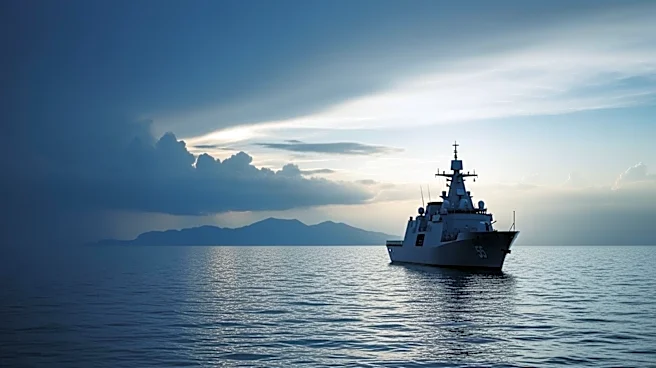
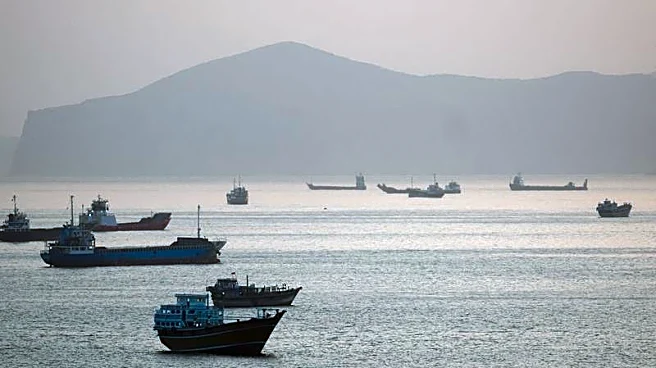
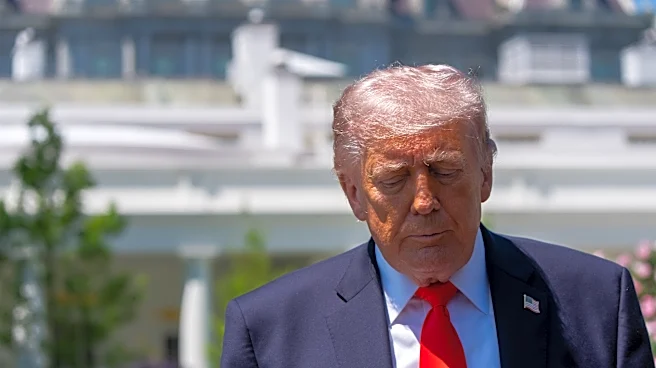
President Trump has announced that hostilities with Iran have been 'terminated,' asserting that he does not require Congressional approval for the ongoing situation. This statement comes as the U.S. maintains a blockade of the Strait of Hormuz, a critical
chokepoint for global oil shipments. The announcement coincides with a deadline under the War Powers Act, which mandates Congressional approval for military actions lasting more than 60 days. The situation in the Strait of Hormuz remains tense, with the blockade impacting international oil markets and raising concerns about potential escalations in the region.
Why It's Important?
The declaration by President Trump has significant implications for U.S. foreign policy and international relations. The blockade of the Strait of Hormuz could disrupt global oil supplies, potentially leading to increased oil prices and economic instability. The assertion of executive power without Congressional approval may also spark debates about the balance of power between the executive and legislative branches in matters of military engagement. This development could influence U.S. relations with allies and adversaries, particularly in the Middle East, where tensions with Iran have been a longstanding issue.
What's Next?
The situation may lead to further diplomatic negotiations or military actions, depending on Iran's response and international pressure. Congress may seek to assert its authority under the War Powers Act, potentially leading to legal or political challenges. The international community will likely monitor the situation closely, with potential implications for global oil markets and regional stability. Stakeholders, including oil companies and governments, will need to assess the risks and prepare for possible disruptions in oil supply chains.