







What's Happening?
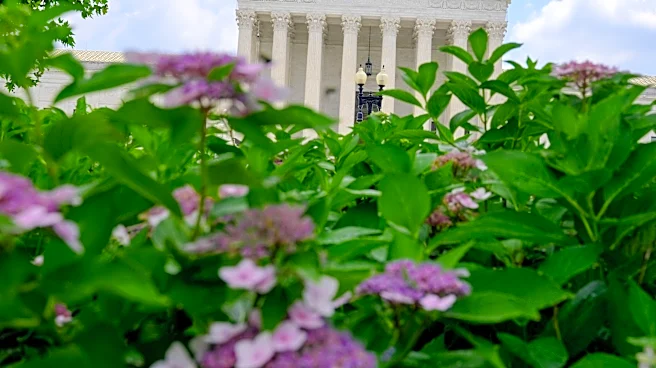
The U.S. Supreme Court has blocked President Trump's attempt to dismiss Federal Reserve Governor Lisa Cook, preserving the central bank's independence. Cook, the first Black woman to serve on the Fed's Board of Governors, was targeted by Trump in an unprecedented
move to assert control over the Fed. The court's decision is seen as a significant affirmation of the Fed's autonomy. Cook, known for her hawkish stance on monetary policy, has been a vocal advocate for addressing inflationary pressures. Her legal battle against Trump highlights ongoing tensions between the executive branch and independent federal agencies.
Why It's Important?
The Supreme Court's decision to block President Trump's attempt to fire Lisa Cook is a critical moment for the independence of the Federal Reserve. It reinforces the principle that the Fed should operate free from political interference, a cornerstone of its ability to manage monetary policy effectively. The ruling also underscores the broader political and economic stakes involved, as Cook's presence on the board represents a commitment to diversity and a focus on inflation control. The outcome of this legal battle could influence future interactions between the executive branch and independent agencies, setting a precedent for how such conflicts are resolved.
What's Next?
Following the Supreme Court's decision, the focus will likely shift to how the Federal Reserve navigates its monetary policy amid ongoing economic challenges. With Cook's position secure, she is expected to continue advocating for measures to address inflation, potentially influencing future interest rate decisions. The ruling may also prompt discussions about the limits of presidential power over independent agencies, potentially leading to legislative or policy changes to further protect these institutions. Stakeholders, including policymakers and financial markets, will be closely monitoring the Fed's actions and any subsequent political developments.