



What's Happening?
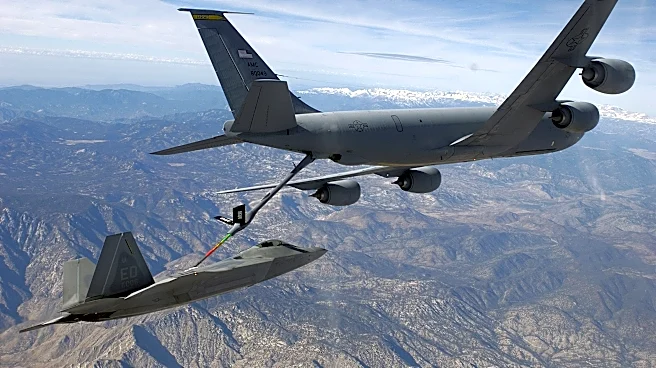
The U.S. Air Force is increasing its training and power projection capabilities on its westernmost islands, including Shemya Island in Alaska's Aleutian Islands and islands near Guam. In late October, F-16s, tankers, and cargo planes deployed to Eareckson
Air Station on Shemya Island for an exercise where jets 'sat alert' for the first time in decades, maintaining readiness for rapid launch. This deployment concluded with long-range operations as part of a U.S.-Canada homeland-defense exercise. Concurrently, the Air Force released a proposal to study the environmental and social impact of conducting up to 1,800 annual aircraft operations on Rota, Saipan, and Tinian in the Commonwealth of the Northern Mariana Islands. These operations would involve deploying fuel, personnel, munitions, and temporary infrastructure for drills. The Air Force is also refurbishing North Field on Tinian, a significant World War II airbase, to serve as a contingency location for its main base on Guam.
Why It's Important?
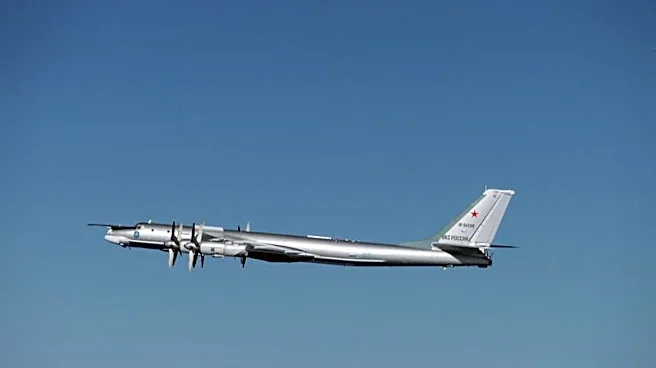
These efforts are crucial for enhancing the U.S. Air Force's ability to project power and monitor adversaries across the Pacific and Arctic, particularly in response to increased Russian and Chinese activity in these regions. By developing more austere airfields and expanding operational locations, the Air Force aims to implement its Agile Combat Employment concept, which emphasizes dispersal and resilience to counter threats. This strategy reduces dependence on larger, more vulnerable bases like Andersen Air Base in Guam. The exercises on Shemya are primarily focused on homeland defense and intercepting Russian aircraft, while investments in the Northern Marianas aim to expand operational locations closer to potential conflict zones. The ability to operate from U.S. territories provides greater freedom of action compared to bases in allied nations, which may impose restrictions during crises.
What's Next?
The Air Force's study on the impact of increased operations in the Northern Mariana Islands is expected to be completed by mid-2028. This study will assess the potential social, economic, and environmental effects of conducting numerous aircraft operations, deploying personnel, fuel, and munitions. Refurbishment efforts at North Field on Tinian are ongoing, with the base already deemed a 'semi-permanent contingency location.' Future operations at Eareckson Air Station on Shemya are not explicitly detailed, but NORAD maintains the capability to move forces to remote locations in Alaska and the Arctic as needed. The continued development of these island airfields will likely see more frequent and complex exercises as the U.S. military adapts its strategy to regional geopolitical dynamics.
Beyond the Headlines
The strategic shift towards dispersed operations across remote island chains highlights a broader re-evaluation of military posture in the Indo-Pacific. This approach acknowledges the vulnerability of large, centralized bases to modern long-range precision strikes and seeks to create a more resilient and adaptable force. The emphasis on 'austere airfields' also implies a need for enhanced logistical capabilities and rapid deployment strategies. While these efforts bolster military readiness, they also raise questions about the long-term environmental impact on sensitive island ecosystems and the potential socio-economic effects on local populations in these remote U.S. territories. The balance between national security imperatives and local community concerns will be a critical aspect of these ongoing developments.