







What's Happening?
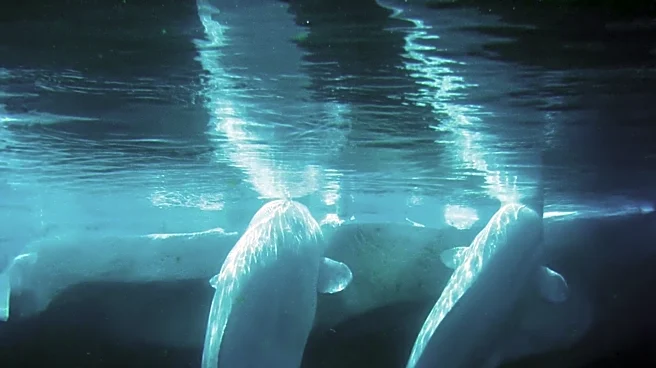
In February 1985, the Soviet icebreaker Moskva undertook a unique rescue operation to save thousands of beluga whales trapped in the ice near the Chukchi Peninsula. The whales, numbering between 2,500 and 3,000, were discovered by local hunters in late
1984, trapped by dense ice with limited breathing holes. The Soviet authorities, alerted to the situation, dispatched the Moskva, one of the few ships capable of breaking through the thick ice. Upon arrival, the crew faced the challenge of coaxing the whales to follow the ship through a navigable corridor they created. According to Soviet reports, the crew played music over loudspeakers to encourage the whales to follow the icebreaker. The operation was partially successful, with approximately 2,000 whales eventually reaching open water, although around 1,000 perished.
Why It's Important?
This operation highlights the intersection of human ingenuity and environmental conservation. The use of an icebreaker to create a path for the whales underscores the potential for technology to aid in wildlife rescue efforts. The event also reflects the broader implications of human intervention in natural habitats, raising questions about the balance between technological advancement and ecological preservation. The successful rescue of a significant number of whales demonstrates the potential for collaborative efforts between local communities and authorities in addressing environmental crises. This operation serves as a reminder of the importance of preserving marine life and the ecosystems they inhabit, which are often threatened by natural and human-induced changes.
What's Next?
While the immediate crisis was resolved, the event underscores the need for ongoing monitoring and protection of marine environments, particularly in regions susceptible to rapid environmental changes. Future efforts may focus on developing more advanced technologies and strategies for wildlife rescue and conservation. Additionally, the operation may inspire further research into the effects of human activities on marine life and the development of policies to mitigate these impacts. The collaboration between local communities and authorities in this rescue effort could serve as a model for future conservation initiatives.
Beyond the Headlines
The operation raises ethical considerations about human intervention in natural processes. While the rescue was necessary, it prompts reflection on the broader impact of human activities on wildlife and ecosystems. The use of music to influence animal behavior also opens discussions on the psychological and behavioral responses of marine mammals to human-generated sounds. This event may contribute to a deeper understanding of the complex relationship between humans and the natural world, encouraging more sustainable and respectful interactions with wildlife.