







What's Happening?
A federal judge has halted the Trump administration's efforts to create a comprehensive voter database that would pool sensitive personal data, including Social Security numbers, of millions of Americans. U.S. District Judge Sparkle Sooknanan, appointed
by President Joe Biden, ruled that the administration's actions violated privacy rights and threatened the right to vote. The lawsuit, brought by the League of Women Voters and the Electronic Privacy Information Center (EPIC), argued that the database, which expanded the Department of Homeland Security's Systematic Alien Verification for Entitlements (SAVE) program, was being used to purge voter rolls based on unreliable data. The judge's decision emphasized the need for government agencies to adhere to privacy laws and maintain accountability.
Why It's Important?
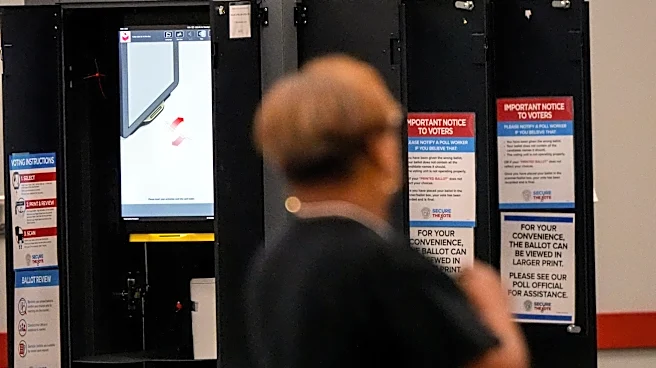
The ruling is significant as it underscores the ongoing battle over voter rights and privacy in the U.S. The blocked database was part of a broader effort by the Trump administration to reshape federal elections, which critics argue could lead to voter suppression. By halting the database, the court has protected the privacy of American citizens and reinforced the integrity of the electoral process. This decision is particularly crucial as it comes ahead of the 2026 midterm elections, where control of Congress is at stake. The ruling prevents the use of potentially flawed data to disenfranchise voters, thereby safeguarding democratic principles.
What's Next?
The decision may lead to further legal challenges as the Trump administration could seek to appeal the ruling. Additionally, the outcome of this case could influence future policies regarding voter data management and privacy. As the midterm elections approach, both political parties are likely to intensify their efforts to ensure voter access and integrity, potentially leading to new legislative proposals or executive actions. Stakeholders, including civil rights organizations and government agencies, will need to navigate these developments while balancing privacy concerns with election security.