


What's Happening?
India is gradually rebuilding its relationship with Afghanistan following the Taliban's return to power in August 2021. After initially closing its embassy, New Delhi established a technical mission in 2022 for humanitarian assistance and diplomatic contact.
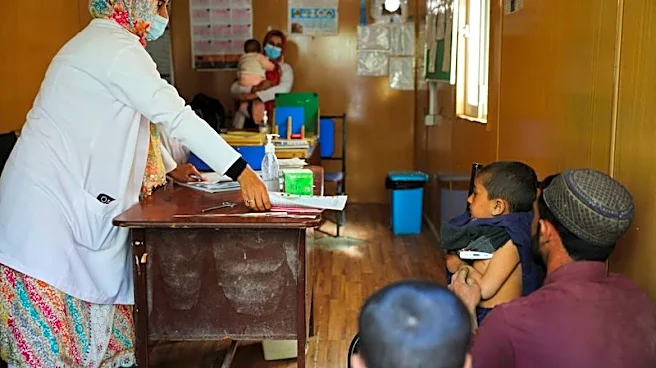
Relations advanced further in October 2025, with Afghan Foreign Minister Amir Khan Muttaqi visiting New Delhi and India announcing plans to restore its full diplomatic presence in Kabul. India has invested over $3 billion in Afghan development projects, including healthcare, infrastructure, and water management, and maintains humanitarian assistance. It is also exploring trade opportunities through Iran's Chabahar Port, providing access to Afghanistan without relying on Pakistani transit routes. This expanding engagement, however, raises longstanding security concerns for Pakistan, which fears India could exploit deteriorating relations between Islamabad and Kabul to strengthen its influence along Pakistan's western frontier, according to analysts Feryaz Ocakli and Yelena Biberman writing for the Lowy Institute.
Why It's Important?
India's renewed and expanding engagement with Afghanistan is a significant development in regional geopolitics, directly impacting the U.S.'s strategic interests in South Asia. For the U.S., a stable Afghanistan and a balanced regional power dynamic are crucial for counter-terrorism efforts and maintaining influence. India's investments in Afghanistan's development and its efforts to secure alternative trade routes through Chabahar Port could contribute to Afghanistan's economic stability, which is a key factor in preventing the resurgence of extremist groups. However, Pakistan's apprehension about India's growing influence along its western border could exacerbate existing tensions between the two nuclear-armed neighbors, potentially destabilizing the region. The U.S. has a vested interest in promoting dialogue and de-escalation between India and Pakistan to prevent regional conflicts that could divert resources and attention from broader security objectives.
What's Next?
The evolving regional alignments suggest a continued cautious approach from India in its engagement with Afghanistan, balancing its strategic and economic interests with the complexities of the Taliban regime. Pakistan will likely continue to voice its security concerns regarding India's presence, potentially seeking diplomatic interventions or strengthening its own alliances, particularly with China. The U.S. and other international actors may need to play a more active role in mediating tensions and encouraging regional cooperation to prevent further escalation. The long-term stability of Afghanistan will depend on its ability to manage these external influences while addressing its internal political and economic challenges. The development of trade routes like Chabahar Port will be critical in shaping Afghanistan's economic future and its integration into regional commerce.
Beyond the Headlines
The regionalization of the Pakistan-Afghanistan conflict, influenced by the strategic rivalries between China and India, highlights a broader shift in global power dynamics. The U.S. withdrawal from Afghanistan created a vacuum that regional powers are now actively filling, leading to a more complex and multi-polar security landscape. This situation underscores the challenges of nation-building and regional stability in post-conflict zones, where external interests can often complicate internal dynamics. The ethical implications of engaging with the Taliban regime, even for humanitarian or economic purposes, remain a contentious issue for many international actors. The long-term impact on human rights, particularly for women and minorities in Afghanistan, will continue to be a critical concern as these geopolitical shifts unfold.