



What's Happening?
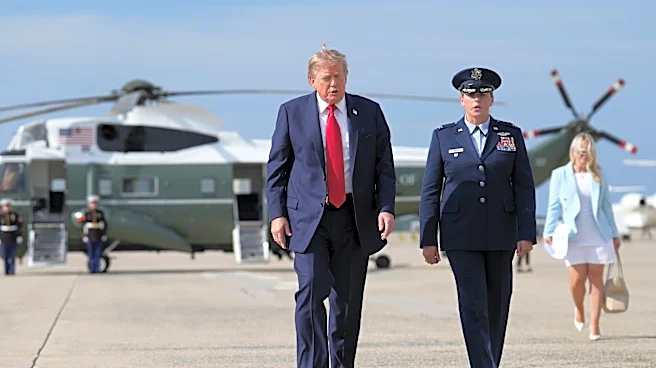
President Trump will commemorate the 25th anniversary of the September 11 terror attacks at the Pentagon, rather than attending the ceremony at Ground Zero in New York City. This decision stems from President Trump's desire to deliver remarks, which is not
permitted at the nonpartisan Ground Zero event run by the National September 11 Memorial and Museum. Vice President JD Vance is scheduled to attend the World Trade Center ceremony. The President's team initially considered a visit to New York City, with early plans including his attendance at the Ground Zero memorial. However, the memorial has maintained a policy since 2012 of not allowing politicians to speak, leading to the change in plans. White House spokesperson Anna Kelly stated that President Trump, as a proud New Yorker, will use his remarks to remember those killed, honor their loved ones, and pay tribute to first responders. Unlike Ground Zero, the Pentagon allows the President to deliver remarks, a practice he followed last year.
Why It's Important?
This decision highlights the ongoing tension between presidential prerogative and the nonpartisan nature of national memorial sites. By choosing the Pentagon, President Trump can deliver a speech, which is a key aspect of his public engagement, but it also means he will not be present at the primary site of the 9/11 attacks in New York City. This could be perceived differently by various segments of the American public, particularly those in New York who may view his absence from Ground Zero as a departure from tradition or a missed opportunity for unity. The choice also underscores the differing protocols and historical contexts of the various 9/11 memorial locations, with the Pentagon offering a platform for direct presidential address that Ground Zero intentionally restricts. The Vice President's attendance at Ground Zero may serve to balance the administration's representation at both significant sites.
What's Next?
President Trump is scheduled to visit the Pentagon next month for the 9/11 anniversary. Following the commemoration, he is slated to travel to Ireland on September 12 to his golf course in Doonbeg, where the Irish Open golf tournament will be held. This itinerary suggests a streamlined travel plan, potentially influenced by the location of the 9/11 remarks. The public will likely observe the content of President Trump's speech at the Pentagon for its tone and message regarding the anniversary. Media coverage will also focus on the contrasting attendance at the different memorial sites and any public reactions to the President's decision to forgo Ground Zero. The Vice President's presence at the World Trade Center ceremony will also be noted, as it maintains a high-level administration presence at the New York site.
Beyond the Headlines
The President's decision to speak at the Pentagon rather than Ground Zero for the 9/11 anniversary touches upon deeper questions of how national tragedies are commemorated and the role of political figures in such events. The Ground Zero memorial's policy of prohibiting political speeches reflects a desire to maintain a sacred, apolitical space for remembrance, focusing solely on the victims and heroes. This contrasts with the more traditional role of a president in delivering public addresses on significant national occasions. The choice also implicitly raises questions about the balance between honoring the solemnity of a memorial and the desire of a sitting president to communicate directly with the nation. This situation could reignite discussions about the appropriate boundaries for political involvement in national remembrance events and the evolving nature of how the U.S. collectively processes and memorializes its most profound historical traumas.