







What's Happening?
Mexico City is currently grappling with a significant rise in extortion cases, a crime that has become one of the most prevalent and fastest-growing in the country. The issue is exacerbated by corrupt police and organized crime, forcing shopkeepers and citizens
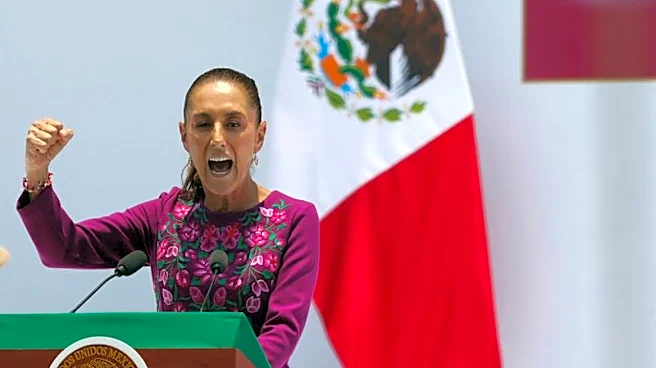
to pay protection fees. The extortion problem is widespread, affecting all sectors of society, from wealthy entrepreneurs to small business owners. The Mexican government, under President Claudia Sheinbaum, is taking steps to address the issue, including a proposed constitutional amendment to make extortion a federal crime. This would allow prosecutors to investigate cases without victims having to file a complaint. Additionally, a national strategy against extortion has been launched, resulting in over 1,300 arrests.
Why It's Important?
The rise in extortion in Mexico City has significant implications for the country's economy and social stability. Extortion is not only a financial burden, costing the country nearly $900 million annually, but it also creates an environment of fear and insecurity. This situation can deter investment and economic growth, as businesses may be forced to close or relocate due to the financial strain and safety concerns. Furthermore, the involvement of corrupt officials in extortion schemes undermines public trust in law enforcement and government institutions, making it challenging to implement effective crime-fighting strategies. Addressing this issue is crucial for improving the quality of life for citizens and fostering a more stable and prosperous economic environment.
What's Next?
The Mexican government is expected to continue its efforts to combat extortion through legislative changes and law enforcement initiatives. The proposed constitutional amendment to make extortion a federal crime could significantly enhance the ability of authorities to tackle this issue. Additionally, ongoing operations like Operation Swarm aim to root out corruption among local officials, which is a critical step in addressing the problem. The success of these initiatives will depend on the government's ability to maintain momentum and public support, as well as its capacity to protect victims and witnesses who come forward. The international community may also play a role in supporting Mexico's efforts through collaboration and sharing best practices in crime prevention.