




What's Happening?
Somalia has officially launched its national Multi-Hazard Early Warning System (MHEWS) and a 24/7 National Situation Room. This initiative, supported by the IGAD Climate Prediction and Applications Centre (ICPAC) and funded by the European Union, aims
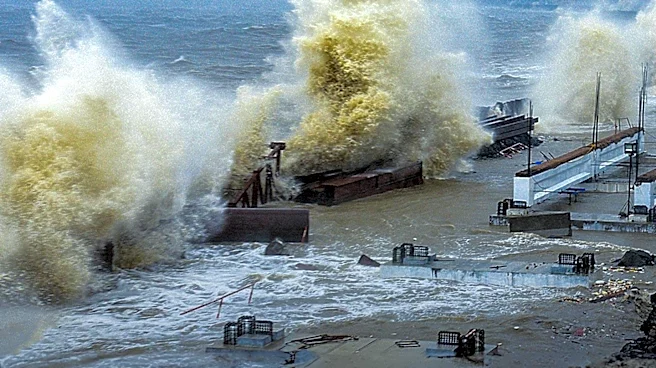
to centralize real-time hazard monitoring, analysis, visualization, and dissemination of early warning information. The MHEWS platform allows decision-makers at national and sub-national levels to view risks on a single screen, enabling timely action. The National Situation Room is linked to ICPAC's regional situation room, integrating Somalia's warnings into a broader regional network and allowing regional forecasts to inform national decisions. This development follows Uganda's launch of its MHIEWS in July 2026, making Somalia the second IGAD Member State to implement such a system with ICPAC's assistance. The system is designed to address recurring natural disasters like droughts, floods, tropical cyclones, landslides, and disease outbreaks, which have become more frequent and severe in Somalia.
Why It's Important?
The implementation of Somalia's MHEWS is crucial for enhancing the country's resilience to natural disasters and protecting its population. By providing earlier warnings and better data, the system is expected to lead to more informed decisions and a reduction in the loss of lives and livelihoods. Somalia has historically suffered significantly from delayed warnings, making this centralized platform a vital tool for proactive disaster management. This system also strengthens Somalia's commitment to national disaster risk management priorities and international frameworks such as the Sendai Framework for Disaster Risk Reduction and the UN Secretary-General's 'Early Warnings for All' initiative. The integration into a regional network with Uganda signifies a growing collaborative effort in the Greater Horn of Africa to establish a connected early warning system, fostering regional stability and shared security interests against environmental threats.
What's Next?
ICPAC plans to continue working with IGAD Member States to expand national multi-hazard early warning systems across the region, aiming for a fully connected network in the Greater Horn of Africa. For Somalia, the immediate next steps involve the full operationalization of the MHEWS and the 24/7 National Situation Room, ensuring that administrators and stakeholders are proficient in using the system. Training sessions have already been conducted for government ministries and departments to define roles and responsibilities for effective warning dissemination and action. The focus will be on translating forecasts into anticipatory actions, such as pre-positioning supplies, alerting communities, and releasing anticipatory financing, to mitigate the impact of future hazards. This proactive approach is expected to improve Somalia's ability to prepare for and respond to disasters, aligning with its existing leadership in anticipatory action.
Beyond the Headlines
The launch of Somalia's MHEWS represents a significant step towards leveraging technology for humanitarian aid and disaster preparedness in vulnerable regions. Beyond the immediate benefits of saving lives and protecting livelihoods, this system fosters a culture of proactive governance and regional cooperation. It highlights the critical role of international partnerships, such as those with ICPAC and the European Union, in building capacity within developing nations. The emphasis on a 'system built to be run by Somalis' underscores the importance of local ownership and sustainability in such initiatives. This model could serve as a blueprint for other countries facing similar environmental challenges, demonstrating how integrated data management and regional collaboration can transform disaster response from reactive to preventive, ultimately contributing to long-term stability and development in the Horn of Africa.