

What's Happening?
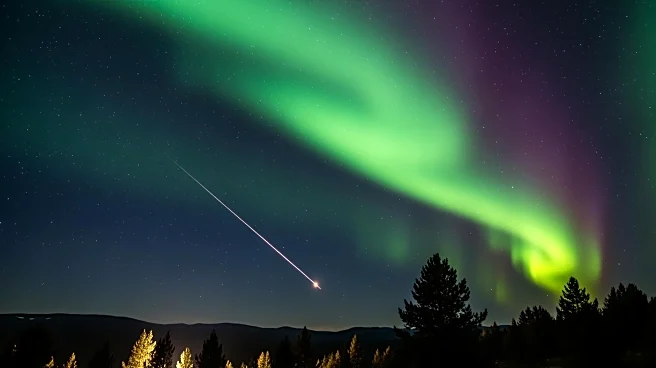
Montana is gearing up for a celestial spectacle this weekend with the peak of the Geminid Meteor Shower, expected to occur overnight on December 13 and 14. The National Weather Service forecasts potential clear skies in parts of Montana, offering a chance
to witness the last major meteor shower of 2025. The Geminid Meteor Shower, known for its bright meteors, is unique as it originates from an asteroid rather than a comet. This year, the waning moon will not significantly interfere with the viewing. Additionally, the comet 3I/Atlas is making its closest approach to Earth on December 19, although it poses no threat and will be visible only with telescopes.
Why It's Important?
The Geminid Meteor Shower is one of the most anticipated astronomical events of the year, providing a significant opportunity for stargazers and astronomers to observe a high volume of meteors. This event not only captivates the public's interest in astronomy but also highlights the unique characteristics of the Geminids, which are linked to an asteroid rather than a comet. The potential visibility of comet 3I/Atlas adds another layer of interest, as it is one of the few interstellar objects observed within our solar system. Such events can inspire educational and scientific pursuits, fostering a greater appreciation for space and science.
What's Next?
As the Geminid Meteor Shower peaks, observers in Montana and other parts of the U.S. will be watching the skies for clear weather to maximize their viewing experience. The comet 3I/Atlas will continue to be monitored by NASA and other space agencies to gather more data on its trajectory and characteristics. The public is encouraged to find dark, open areas away from city lights to enjoy the meteor shower. The event also serves as a reminder of the ongoing need for public engagement in science and astronomy, potentially leading to increased interest in future celestial events.