
What's Happening?
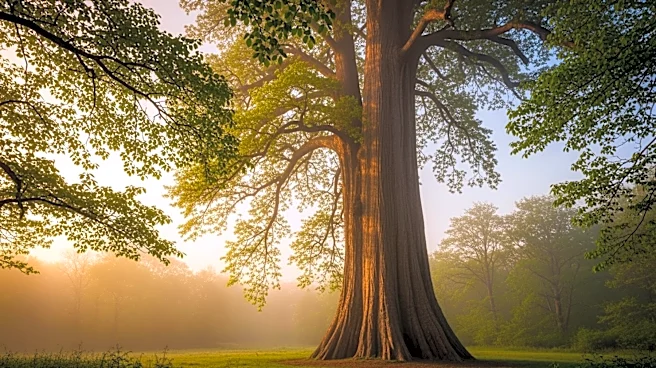
Researchers in Taiwan have identified East Asia's tallest known tree, named the 'Heaven Sword,' a 1,000-year-old Taiwania fir standing 84.1 meters tall. The discovery was made after a decade-long search using
aerial scanning and traditional climbing methods. The tree is located in a secluded valley near Taiwan's Da’an River. This effort is part of a broader initiative to document Taiwan's tallest trees, which play a crucial role in absorbing carbon dioxide and supporting biodiversity. The study emphasizes the importance of these trees in combating climate change and preserving ecological balance.
Why It's Important?
The identification of the 'Heaven Sword' underscores the significance of preserving ancient trees, which are vital for maintaining biodiversity and mitigating climate change. These trees act as carbon sinks and provide habitats for various species, contributing to the ecological health of their environments. The discovery also highlights the potential of using advanced technologies like lidar in conservation efforts, offering a model for similar initiatives worldwide. Protecting such natural resources is crucial as they face threats from climate change and human activities.
Beyond the Headlines
The discovery of the 'Heaven Sword' also reflects the cultural and historical importance of giant trees in Taiwan, where they are revered by indigenous communities. This cultural dimension adds another layer to conservation efforts, emphasizing the need to integrate traditional knowledge with scientific research. The study also points to the potential for these trees to serve as indicators of forest health and history, providing insights into past environmental conditions and guiding future conservation strategies.