







What's Happening?
Tarrant County, Texas, has voted to significantly reduce the number of polling sites for the upcoming midterm elections. The county commissioners, in a 3-2 party-line vote, approved a plan that cuts Election Day voting locations from 316 in 2022 to 224,
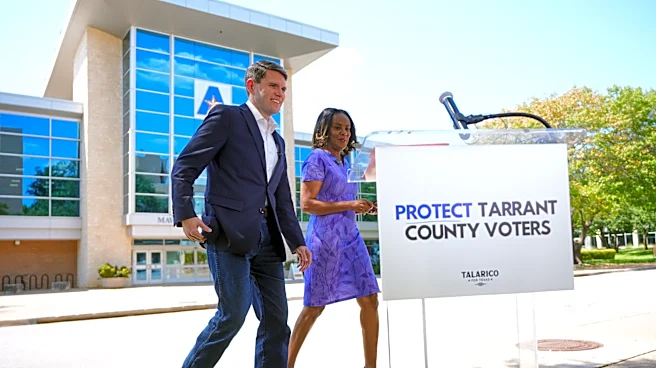
representing a nearly 30% decrease. Early voting locations will also see a reduction from 50 to 47. This decision has ignited protests and accusations of voter suppression, particularly from Democratic officials and community members. Critics highlight that many of the reductions are concentrated in majority-minority areas and areas with higher poverty rates, which are projected to lose a disproportionate number of polling sites. For instance, ZIP codes with the highest poverty rates are expected to lose about 41% of their Election Day locations, compared to 15% in areas with the lowest poverty rates. Republican officials, including County Judge Tim O’Hare, defend the cuts by arguing they will consolidate resources and prevent low-turnout sites, ensuring sufficient voting opportunities for all. Amendments proposed by Democratic commissioners to restore polling locations at the University of Texas at Arlington and Tarrant County College campuses were rejected.
Why It's Important?
This decision in Tarrant County carries significant implications for voter access and the integrity of the electoral process in a crucial battleground region. Tarrant County, the 14th largest county in the U.S. and home to Fort Worth, has historically been a Republican stronghold but is increasingly becoming a swing county with a growing minority population that leans Democratic. The reduction in polling locations could disproportionately affect voters of color, young voters, and those with lower socioeconomic status who may face challenges with transportation or time constraints. Critics argue that these cuts create modern-day barriers to voting, akin to historical poll taxes, by making it harder for certain demographics to cast their ballots. This move could influence the outcomes of key races, including a pivotal U.S. Senate contest and several U.S. House races, potentially shifting the balance of power in Texas and nationally. The controversy also underscores broader national debates about election administration, voter access, and allegations of voter suppression, particularly in states with competitive political landscapes.
What's Next?
The approved plan for reduced polling locations will be implemented for the upcoming November midterm elections in Tarrant County. This is expected to intensify political activism and voter mobilization efforts from groups opposing the changes. Democratic candidates and civil rights organizations will likely continue to highlight the potential impact on voter turnout and access, urging residents to overcome these new barriers. Legal challenges, though not explicitly mentioned in the source, could also emerge as a response to the perceived voter suppression tactics. The Tarrant County Judge Tim O’Hare, who supported the reductions, will face re-election in November, with Democratic County Commissioner Alisa Simmons, a vocal opponent of the cuts, challenging him. The outcome of these elections will serve as a critical indicator of public sentiment regarding these changes and could influence future election administration policies in the county and potentially across Texas.
Beyond the Headlines
The debate over polling location reductions in Tarrant County extends beyond mere logistical adjustments; it touches upon fundamental questions of democratic participation and equity. The comparison of these cuts to historical poll taxes by Commissioner Roderick Miles Jr. highlights the deep-seated concerns about systemic barriers to voting, particularly for marginalized communities. The emphasis on 'community' and 'familiarity' of polling sites by Miles underscores the cultural and social significance of these locations, which often serve as more than just places to cast a ballot. This situation also reflects a broader national trend where election administration decisions, often framed as efficiency measures, are viewed through a partisan lens and are perceived to have strategic political implications. The long-term impact could be a further erosion of trust in electoral processes among affected communities and a deepening of political polarization around voting rights.