







What's Happening?
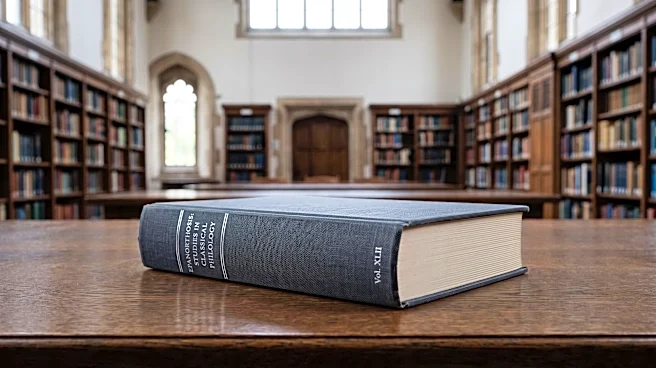
Stedman Professor of Economics Bob Williams has been named a finalist in the Social Change category of American Book Fest’s 2026 Best Book Awards for his work, "Funding White Supremacy: Federal Wealth Policies and the Modern Racial Wealth Gap." Published
in 2025 by Cambridge University Press, the book investigates how federal policies have historically contributed to and exacerbated the wealth disparity between Black and white households in the United States. Williams' research specifically highlights a dozen provisions within the federal tax code that, by his calculations, distribute over $1 trillion in benefits annually, predominantly to affluent white households. The book also details the weakening of federal estate and gift taxes over time, further contributing to this imbalance. Williams expressed that the recognition is a significant honor for a topic he is deeply passionate about, suggesting the award could broaden the book's readership beyond academic circles.
Why It's Important?
Professor Williams' book is significant because it meticulously details the systemic ways in which federal policies have perpetuated and widened the racial wealth gap in the U.S. By focusing on specific tax code provisions and the erosion of estate and gift taxes, the book provides a critical examination of how government actions have disproportionately benefited wealthy white households. This analysis is crucial for understanding the historical roots of economic inequality and its ongoing impact on American society. The recognition from the American Book Fest underscores the book's relevance and potential to influence public discourse on economic justice and policy reform. It highlights the need for a deeper understanding of how seemingly neutral policies can have profound and unequal societal consequences, affecting economic mobility and opportunity for different racial groups.
What's Next?
The national recognition of Professor Williams' book is likely to bring increased attention to the issue of the racial wealth gap and the role of federal policies in its perpetuation. This could spur further academic research, policy discussions, and public debate on potential reforms to the U.S. tax code and wealth transfer mechanisms. The book's findings may inform advocacy efforts by civil society groups pushing for economic equity and could be cited in legislative discussions regarding tax policy and wealth distribution. Williams himself is continuing his research, currently working on an article that examines wealth transfer at the household level, comparing adults' current wealth to their parents' wealth when they were younger. This ongoing work aims to shed more light on how economic advantages are passed down through generations, including less obvious forms of support beyond direct inheritances.
Beyond the Headlines
Beyond the immediate policy implications, Professor Williams' work delves into the ethical and societal dimensions of wealth accumulation and intergenerational transfer. His research suggests that policies often perceived as universal, such as tax breaks for homeownership and retirement savings, inherently favor those who already possess capital, thereby compounding existing wealth disparities. This raises fundamental questions about fairness, equal opportunity, and the American dream. The book's focus on the 'iceberg' analogy—where visible inheritances are only a small part of how wealth is transferred—highlights the subtle yet powerful ways economic advantages are conferred through educational opportunities, debt-free college, and early homeownership assistance. This perspective challenges conventional understandings of wealth inequality, urging a broader societal conversation about how structural advantages are created and maintained, and what ethical obligations society has to address these systemic imbalances.