




What's Happening?
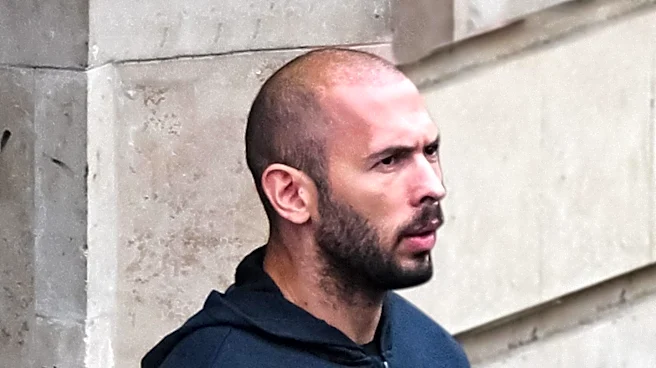
Andrew Tate and his brother Tristan Tate have been reported to Britain’s counter-terror policing unit and the Home Office concerning an alleged 'Russian propaganda' video. The video, posted on the Tates’ social media channels in June, depicts the brothers
in camouflage and body armor in Russia, riding a Soviet-era T-80BV battle tank, using weapons including a flamethrower, and throwing grenades from a trench. A guide in the video suggests they could win a 'special medal' from the 'minister of defense of Russia.' Alicia Kearns, the MP for Rutland and Stamford, filed the complaint, stating that the Conservatives’ National Security Act requires individuals spreading propaganda for a hostile foreign state to register. Kearns questioned how the brothers gained access to a Russian military base and whether they received direction or assistance from the Russian state. A representative for the Tate brothers stated the visit was 'private and personal,' denying any payment, compensation, financial assistance, or direction from the Russian state, and asserted they did not deliver talking points for the Russian government. The brothers were arrested in Miami on July 18 on charges of rape, assault, and facilitating trafficking for sexual exploitation, and are currently fighting extradition to the United Kingdom.
Why It's Important?
This development is significant due to the potential implications for individuals engaging with foreign states, particularly those perceived as hostile, and the legal frameworks governing such interactions. The complaint by MP Alicia Kearns highlights the UK's Foreign Influence Registration Scheme (FIRS) under the National Security Act, which mandates registration for individuals conducting activities in the UK for foreign powers. If the Tate brothers are found to have violated this act, it could set a precedent for how public figures, especially those with large online followings, are held accountable for their activities abroad and their potential influence on public opinion. The controversy also underscores the ongoing debate about the nature of 'propaganda' in the digital age and the responsibilities of social media influencers. The brothers' previous comments, including Andrew Tate's remarks on the Ukraine war and praise for Russian leader Vladimir Putin, and Tristan Tate's tweet about 'relying on Russia to save the world,' add a layer of complexity to the allegations, suggesting a pattern of pro-Russian sentiment that could be interpreted as aligning with Russian state interests.
What's Next?
The UK's counter-terror policing unit and the Home Office are expected to investigate the complaint filed by MP Alicia Kearns. This investigation will likely focus on whether the Tate brothers' activities in Russia fall under the scope of the Foreign Influence Registration Scheme (FIRS) and if they were required to register under the National Security Act. The Independent has contacted Kearns, Counter-Terror Police, and the Home Office for comment, indicating that further details regarding the investigation's progress may emerge. Concurrently, the brothers remain in federal custody in Miami, fighting extradition to the United Kingdom on separate charges of rape, assault, and facilitating trafficking for sexual exploitation. The outcome of the UK investigation could lead to legal action against the Tates if a violation of the National Security Act is determined. This situation could also prompt broader discussions within the UK government regarding the enforcement of foreign influence registration laws, especially concerning individuals with significant public platforms.
Beyond the Headlines
Beyond the immediate legal and political ramifications, this incident touches upon deeper issues concerning the role of social media influencers in international relations and the spread of information. The accusation of 'Russian propaganda' against individuals with a substantial online presence raises questions about the potential for foreign states to leverage such figures for their strategic objectives. The Tates' defense, equating their activities to 'a day at the range' and invoking the Second Amendment, highlights a cultural and legal divergence in how such actions are perceived across different nations. This case could contribute to a growing global conversation about digital sovereignty, the regulation of online content, and the ethical responsibilities of influencers. It also underscores the challenges governments face in distinguishing between personal expression, commercial activities, and state-sponsored influence operations in an increasingly interconnected world, potentially leading to calls for clearer guidelines or stricter enforcement mechanisms for foreign influence registration.