




What's Happening?
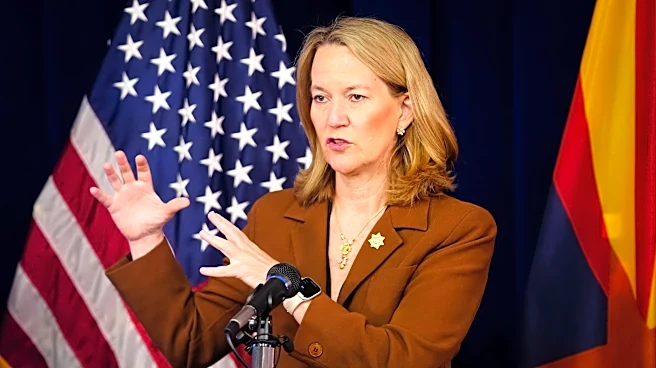
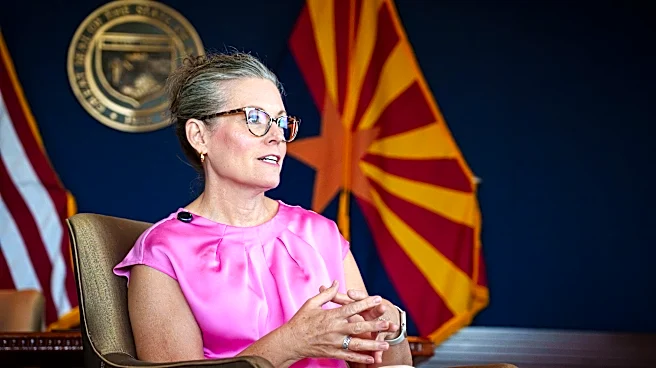
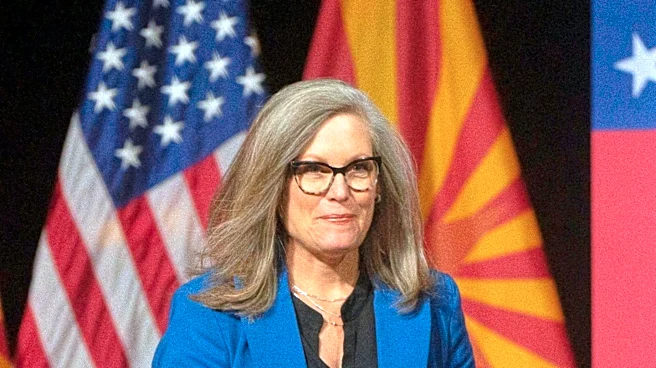
Arizona Governor Katie Hobbs will not face criminal charges following a two-year investigation into allegations of a pay-to-play scheme. State Attorney General Kris Mayes announced on Friday that the investigation found insufficient evidence to support
bribery charges. The probe centered on Sunshine Residential Homes, a company that contributed to Governor Hobbs’ inaugural fund and the Arizona Democratic Party. These contributions preceded an increase in the company's state payment rate. Governor Hobbs, a Democrat, has consistently denied any wrongdoing, stating she was not involved in the decision-making process regarding the rate increase. The investigation, which began in June 2024 at the request of Republican state Senator T.J. Shope, involved extensive review of financial records, emails, and interviews.
Why It's Important?
The decision to clear Governor Hobbs of criminal charges is significant for her administration and for the political landscape of Arizona. Allegations of corruption can severely undermine public trust and political legitimacy. The conclusion of this investigation, finding no evidence of a 'quid pro quo' necessary for a bribery charge, allows Governor Hobbs to move forward without the cloud of criminal prosecution. However, the Attorney General's statement also highlighted the need for greater transparency in political donations and called for legislative reforms, indicating that while no criminal activity was found, the circumstances raised concerns about ethical practices. This outcome could influence future campaign finance regulations and public scrutiny of political contributions in the state.
What's Next?
While Governor Hobbs is cleared of criminal charges, the Attorney General's call for legislative reforms regarding political donations suggests that the issue of transparency in campaign finance will likely remain a point of discussion in Arizona politics. Lawmakers may consider new legislation to address the concerns raised by the investigation, potentially leading to stricter rules on contributions from entities that also receive state contracts or rate adjustments. The political implications for Governor Hobbs and the Democratic Party in Arizona will also be observed, as the allegations, though not leading to charges, may still be used by political opponents in future campaigns. The focus will now shift to how the state addresses the broader issues of ethical governance and campaign finance reform.
Beyond the Headlines
This case underscores the persistent challenges in distinguishing between legal political donations and potentially unethical influence peddling. The Attorney General's emphasis on the lack of a 'quid pro quo' highlights the high legal bar for proving bribery, even when there are appearances of impropriety. This situation prompts a broader discussion about the adequacy of current campaign finance laws in preventing undue influence and ensuring public confidence in government decisions. It also reflects the intense partisan scrutiny that high-profile political figures face, where allegations can trigger extensive investigations regardless of their eventual legal outcome. The call for legislative reforms suggests a recognition that while specific criminal acts may not have occurred, the system itself may be vulnerable to perceptions of corruption, necessitating systemic changes to enhance transparency and accountability.