






What's Happening?
Second Harvest Food Bank of East Tennessee has initiated its Hunger Action Month campaign, a nationwide effort to raise awareness and encourage action against hunger. The campaign, themed 'Assembly Required,' emphasizes the need for collective effort from
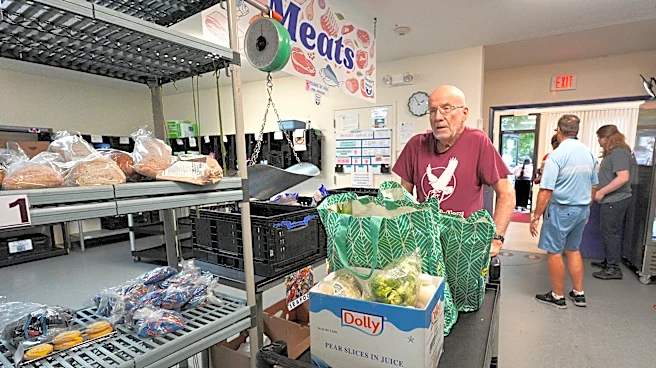
individuals, businesses, churches, civic groups, and volunteers to support those in need. Throughout September, the organization is encouraging East Tennesseans to participate in various activities, including sharing photos of the Henley Street Bridge when it is illuminated orange on September 12, 13, and 29, wearing orange on September 29 for Hunger Action Day, hosting or participating in food drives, and volunteering with Second Harvest Food Bank. According to the organization, nearly 229,980 people in the region are at risk of hunger, including children, seniors, and working families who struggle to consistently access nutritious food. Rachael Ellis, CEO of Second Harvest Food Bank of East Tennessee, highlighted that the theme 'Assembly Required' underscores that ending hunger requires everyone working together. Community support is crucial as families continue to face challenges related to food costs, housing expenses, and other financial pressures.
Why It's Important?
This campaign is important because it addresses the significant issue of food insecurity in East Tennessee, where nearly 230,000 people are at risk of hunger. By mobilizing the community through various activities, Second Harvest aims to increase awareness and generate support for hunger relief efforts. The 'Assembly Required' theme highlights that tackling hunger is not solely the responsibility of food banks but requires a broad societal commitment. This collective approach can lead to more sustainable solutions and a stronger safety net for vulnerable populations. The involvement of individuals, businesses, and community groups can amplify the impact of food distribution and educational programs, ensuring that more families, children, and seniors have access to nutritious food. Furthermore, by drawing attention to the financial pressures faced by families, the campaign implicitly advocates for broader economic stability and support systems that can alleviate the root causes of hunger. The success of such initiatives can serve as a model for other regions facing similar challenges, demonstrating the power of community engagement in addressing critical social issues.
What's Next?
Throughout September, Second Harvest Food Bank of East Tennessee will continue to promote community involvement through its Hunger Action Month activities. Residents are encouraged to participate by spreading awareness, wearing orange on Hunger Action Day, organizing food drives, and volunteering. The illumination of the Henley Street Bridge on specific dates will serve as a visual reminder of the ongoing effort. The organization will likely continue to emphasize the critical role of volunteers and donations in maintaining its operations and expanding its reach. Following Hunger Action Month, Second Harvest will likely assess the impact of the campaign in terms of increased awareness, volunteer engagement, and food donations. This assessment will inform future strategies for combating food insecurity in East Tennessee. The ongoing challenges of food costs and housing expenses suggest that the need for sustained community support and advocacy will persist beyond September, prompting the food bank to continue its efforts to secure resources and engage stakeholders.
Beyond the Headlines
The 'Assembly Required' theme of Second Harvest's campaign subtly points to a deeper societal implication: that hunger is a systemic issue requiring collective responsibility rather than individual blame. By framing hunger relief as a community-wide assembly, the campaign challenges the notion that food insecurity is a private struggle, instead positioning it as a public concern that demands collaborative solutions. This approach can foster a stronger sense of community solidarity and mutual aid, potentially shifting public perception and policy discussions towards more comprehensive support systems. The emphasis on volunteers and local engagement also highlights the power of grassroots efforts in addressing large-scale problems, demonstrating that meaningful change can originate from within communities. This model can build social capital and resilience, creating networks of support that extend beyond immediate food provision to address other related challenges faced by vulnerable populations. Ultimately, the campaign aims to cultivate a culture where empathy and collective action are central to ensuring that no one in East Tennessee goes hungry.