

What's Happening?
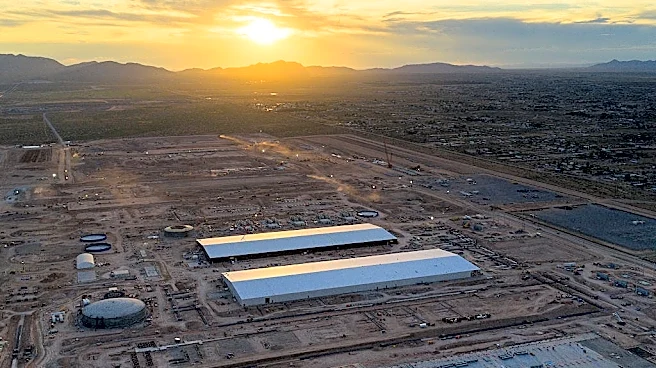
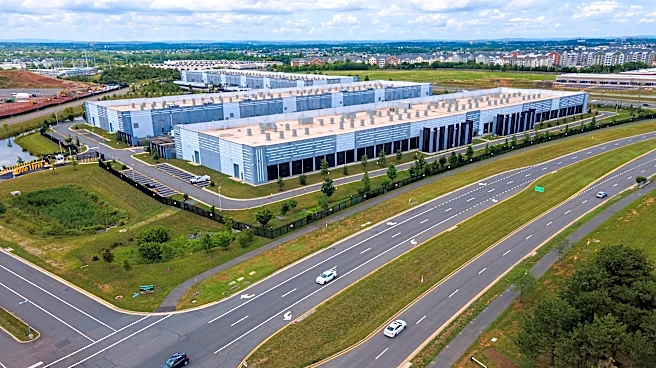
Attendees at the Jefferson County Fair in West Virginia are primarily concerned about the rapid growth of data centers and associated infrastructure, such as power lines, rather than economic prices. This sentiment was observed by David Marcus, who noted
a shift in voter priorities compared to two years prior when economic costs were the dominant topic. Farmers, like Roy, expressed that data centers and power lines pose a threat to their land, which is their primary asset. Democratic candidates for the House of Delegates, Jenny Thacker and Marta Beck, also voiced concerns, particularly regarding water usage by data centers and the state's perceived erosion of local control over development. Thacker suggested legislation to restrict data centers from using well water, while Beck highlighted the issue of municipalities losing control. Tamara Thompson, Vice President of We The People of Jefferson County, confirmed that many fairgoers are against data centers, citing noise pollution as a common complaint. A retired teacher, Sarah, summarized the prevailing attitude by stating, 'I guess we need ‘em, but nobody wants ‘em.'
Why It's Important?
This shift in public concern from economic prices to issues surrounding data center development and local control signifies a critical evolution in voter priorities within West Virginia and potentially across the nation. It indicates that for many Americans, the immediate economic crisis has receded, allowing other quality-of-life and environmental concerns to come to the forefront. The focus on 'too much growth' rather than 'not enough growth' suggests a growing apprehension about the unmanaged expansion of technology infrastructure and its impact on local resources and community character. The debate over water usage and local control highlights a broader conflict between state-level economic development initiatives and local community autonomy. This sentiment could influence future political campaigns and policy decisions, pushing lawmakers to consider more stringent regulations on data center development, particularly concerning environmental impact and local governance. The rejection of 'Big Tech' and the desire for local control also reflect a deeper distrust of large corporations and centralized decision-making among the populace.
What's Next?
The strong public sentiment observed at the Jefferson County Fair is likely to translate into increased pressure on local and state politicians to address concerns about data centers and rapid growth. Candidates like Jenny Thacker and Marta Beck are already incorporating these issues into their platforms, suggesting that future legislative efforts could focus on regulating water usage by data centers and restoring local control to municipalities. The ongoing 'backyard brawl' over development in West Virginia, as mentioned in the context of Morrissey and Spanberger, indicates that these issues will remain prominent in political discourse. It is plausible that West Virginia could follow the lead of other states, such as Maine and Texas, which have implemented moratoria or audits on data center projects. The continued advocacy from groups like We The People of Jefferson County will ensure that these concerns remain on the political agenda, potentially leading to new zoning laws, environmental regulations, or even state-level commissions to oversee technology infrastructure development. The outcome will depend on how effectively these local concerns are translated into actionable policy.
Beyond the Headlines
The concerns raised by West Virginia fairgoers about data centers and rapid growth extend beyond immediate environmental or economic impacts, touching upon fundamental questions of community identity and the balance between technological advancement and local preservation. The phrase 'too much growth' encapsulates a broader societal anxiety about the pace of change and the feeling of losing control over one's environment. This issue highlights the ethical dilemma of technological progress: while data centers are essential for the digital economy, their physical footprint and resource demands can clash with local values and ecological sustainability. The call for local control reflects a desire for self-determination in an increasingly globalized and technologically driven world. This phenomenon is not unique to West Virginia; it represents a growing national conversation about how to manage the externalities of the tech sector, particularly when regulation lags behind innovation. The fairgoers' sentiments suggest a potential cultural shift where communities are prioritizing quality of life and environmental stewardship over unchecked economic expansion, challenging the traditional metrics of progress.