





What's Happening?
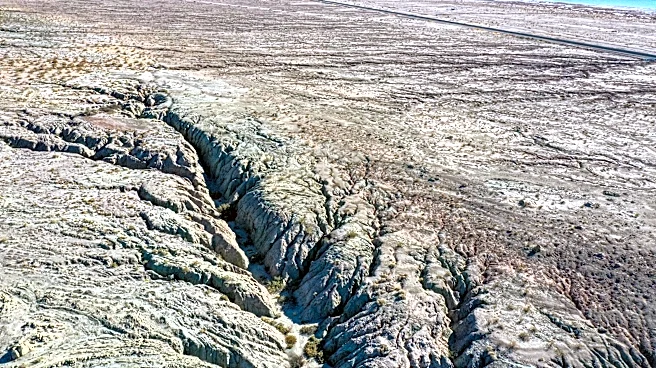
The Elsinore Fault Zone, one of Southern California's largest fault systems, is a significant seismic concern despite its historical quietness. Running approximately 110 miles through areas like Corona, Lake Elsinore, and Temecula, this fault has not
produced a major earthquake (above magnitude 5.2) on its main trace since 1910. This prolonged period of inactivity, spanning over 110 years, is a cause for concern among seismologists. Paleoseismic trenching indicates that the Elsinore Fault typically produces major surface-rupturing earthquakes, ranging from magnitude 6.5 to 7.5, roughly every 250 years. The current silence suggests a substantial accumulation of strain along the fault. The Interstate 15 corridor, which runs along the fault, has experienced rapid population growth, now home to over half a million people, significantly increasing the potential impact of a future rupture. The fault's Whittier splay also points directly towards the densely populated eastern Los Angeles Basin.
Why It's Important?
The Elsinore Fault Zone's potential for a major earthquake has critical implications for Southern California and the broader U.S. economy. The rapid urbanization along the fault line means that a rupture would affect a significantly larger population and more extensive infrastructure than in 1910. Hazard planners consider a magnitude ~6.8 Whittier-Elsinore scenario as one of the most serious for Southern California due to its proximity to major population centers and the Los Angeles metropolitan area. Such an event could lead to widespread damage to homes, businesses, and critical transportation networks, including Interstate 15. The economic disruption would be substantial, impacting local industries, supply chains, and potentially requiring massive federal aid for recovery. The long-term silence of the fault, while seemingly reassuring, actually signifies a greater accumulation of energy, making the eventual earthquake potentially more powerful and destructive, thus demanding robust preparedness and mitigation strategies.
What's Next?
In anticipation of a potential major earthquake, Southern California communities along the Elsinore Fault Zone must prioritize ongoing seismic preparedness. This includes continued geological studies and monitoring to better understand the fault's behavior and strain accumulation. Building codes and retrofitting initiatives will remain crucial to ensure that both new and existing structures can withstand significant seismic activity. Public education campaigns are essential to inform residents about earthquake safety protocols, emergency kits, and evacuation routes. Local and state emergency management agencies will need to regularly update and practice their disaster response plans, coordinating with federal resources to ensure a swift and effective reaction to a major event. The increasing population density in the affected corridor necessitates a proactive approach to minimize casualties and economic disruption.
Beyond the Headlines
The 'quiet giant' nature of the Elsinore Fault Zone raises profound questions about human perception of risk and long-term urban development. The historical lack of major seismic activity can lead to a false sense of security, potentially hindering public and political will for comprehensive preparedness measures. This situation highlights the ethical responsibility of urban planners and policymakers to prioritize long-term safety over short-term economic gains in rapidly developing areas. The potential for a catastrophic event also underscores the need for innovative engineering solutions and resilient infrastructure designs that can withstand unpredictable natural forces. Furthermore, the psychological impact of living under the constant, albeit often unacknowledged, threat of a major earthquake can influence community well-being and resilience, necessitating robust mental health support systems in post-disaster scenarios.