





What's Happening?
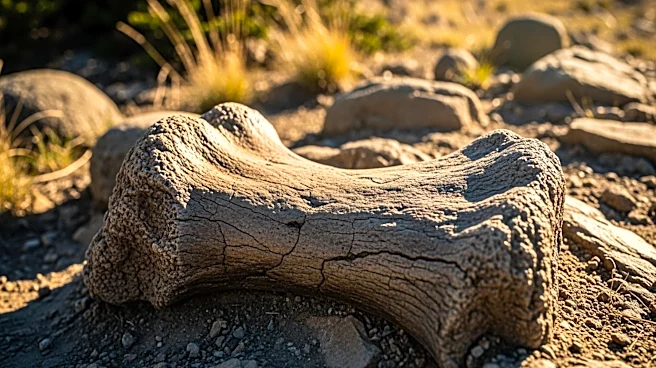
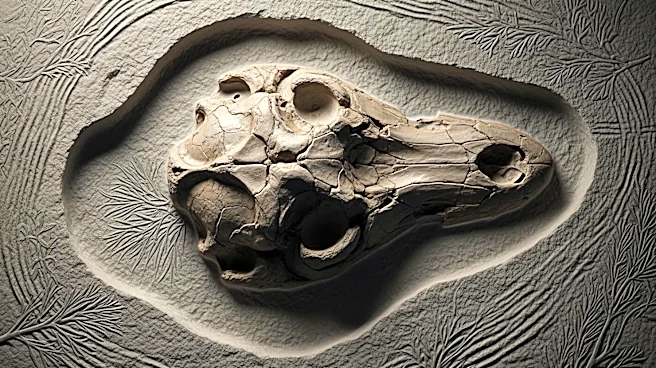
Researchers have uncovered a fossil of an ichthyosaur, a dolphin-shaped marine reptile from the genus Temnodontosaurus, in the Mistelgau clay pit near Bayreuth, Germany. This fossil, dating back over 180 million years, has sparked interest due to the evidence
of survival despite multiple injuries. The ichthyosaur, which could grow over 20 feet long, showed signs of damage around the shoulder and jaw, which likely affected its hunting abilities. Despite these challenges, the reptile adapted its feeding behavior, as indicated by the wear on its teeth and the presence of gastroliths in its abdomen. This discovery, published in the journal Zitteliana, suggests that these marine reptiles may have persisted in the Southwest German Basin longer than previously thought.
Why It's Important?
The discovery of this ichthyosaur fossil provides valuable insights into the resilience and adaptability of ancient marine predators. Understanding how these creatures adapted to injuries and environmental changes can inform current studies on marine ecosystems and their evolution. The findings highlight the importance of fossil-rich sites like Mistelgau in reconstructing historical marine environments and understanding the dynamics of ancient ecosystems. This research not only contributes to paleontology but also underscores the significance of protecting such sites for future scientific exploration.