

What's Happening?
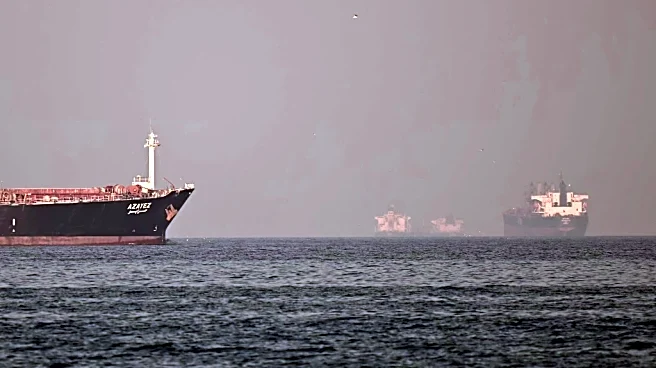
French President Emmanuel Macron and South Korean President Lee Jae-myung have agreed to collaborate on reopening the Strait of Hormuz, a critical shipping lane for global oil supplies. The agreement comes amid heightened tensions due to the ongoing conflict
involving Iran. The leaders emphasized the importance of stabilizing the Middle East and ensuring safe passage through the strait. The meeting also resulted in agreements to expand cooperation in technology, energy, and other sectors. Meanwhile, Iran has warned the UN Security Council against any provocative actions, complicating efforts to secure the strait.
Why It's Important?
The Strait of Hormuz is a vital artery for global oil transportation, and its closure has significant implications for the world economy. The collaboration between France and South Korea highlights the international community's concern over the potential economic fallout from the strait's closure. The situation also reflects the complex geopolitical dynamics in the region, involving major powers like the United States, Iran, and Israel. The reopening of the strait is crucial for stabilizing global energy markets and preventing further economic disruptions.
What's Next?
The postponed UN Security Council vote on a resolution to protect shipping in the Strait of Hormuz indicates ongoing diplomatic challenges. The international community will likely continue to seek diplomatic solutions to de-escalate tensions and ensure the safe passage of oil shipments. The collaboration between France and South Korea may pave the way for broader international efforts to address the crisis. However, the situation remains fluid, with potential for further developments depending on the actions of key stakeholders.