


What's Happening?
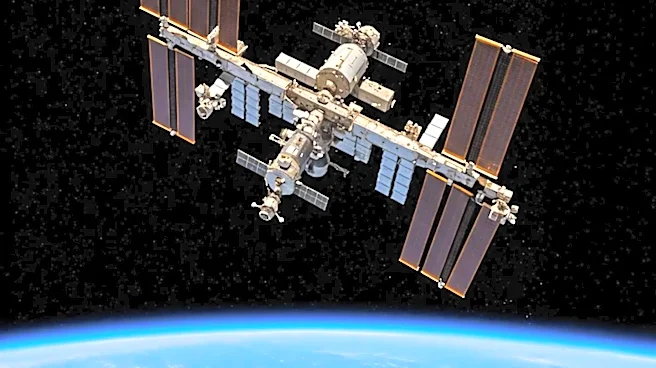
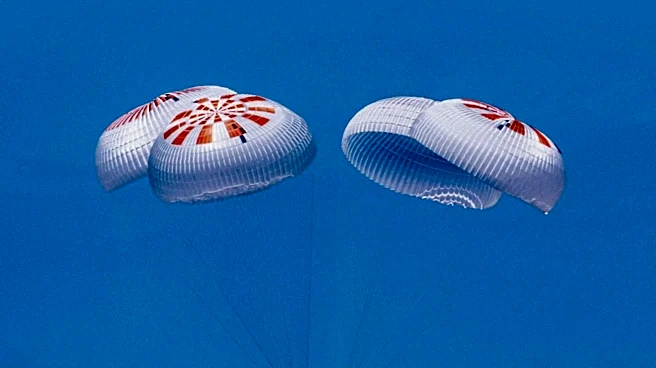
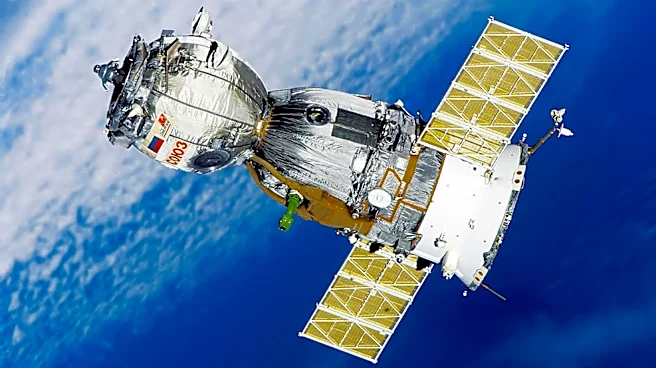
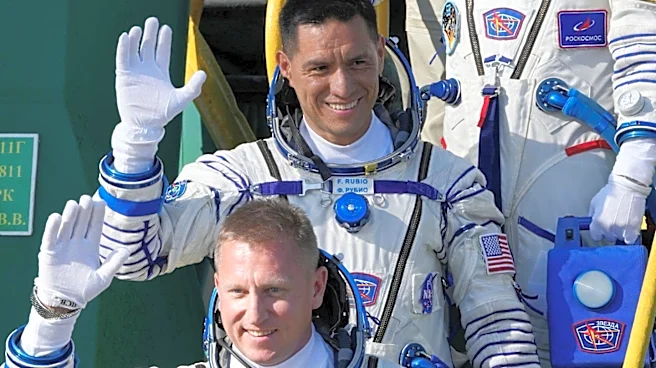
NASA astronaut Chris Williams, along with Russian cosmonauts Sergey Kud-Sverchkov and Sergei Mikaev, has returned to Earth after completing an eight-month mission aboard the International Space Station (ISS). The crew landed in Kazakhstan on July 26,
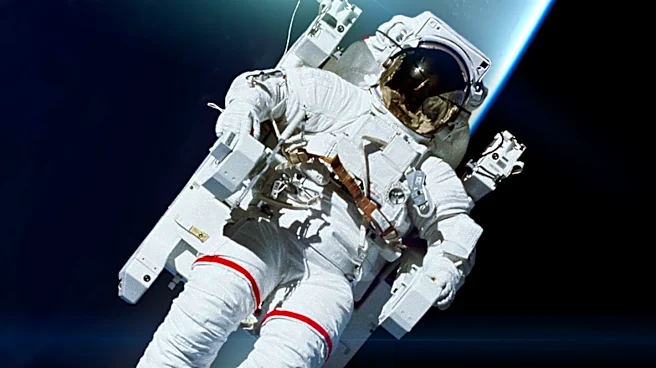
2026. This mission marked Williams' first journey into space, while Kud-Sverchkov was on his second long-duration mission. During their time on the ISS, the crew conducted various scientific investigations and technology demonstrations, including studies on cancer treatment and advanced manufacturing. Williams also participated in two spacewalks, which involved preparing the space station's power system for upgrades and replacing a faulty joint on the Canadarm2 robotic arm.
Why It's Important?
The successful completion of this mission is significant for several reasons. It underscores the ongoing international collaboration in space exploration, particularly between NASA and Roscosmos. The research conducted by the crew contributes to advancements in medical and manufacturing technologies, which could have far-reaching implications for industries on Earth. Additionally, the mission supports NASA's long-term goals of exploring the Moon and Mars, as the experiments and technology demonstrations conducted on the ISS provide valuable data and experience for future deep-space missions. The return of the crew also highlights the reliability and safety of current space travel protocols.
What's Next?
Following their return, the crew will undergo a period of rehabilitation and debriefing to assess their health and gather insights from their mission experiences. NASA will analyze the data collected during the mission to enhance future space exploration efforts. The findings from the scientific investigations conducted on the ISS will be shared with the broader scientific community, potentially leading to new developments in cancer treatment and manufacturing processes. Future missions to the ISS and beyond will continue to build on the knowledge gained from this mission, furthering human understanding of living and working in space.