







What's Happening?
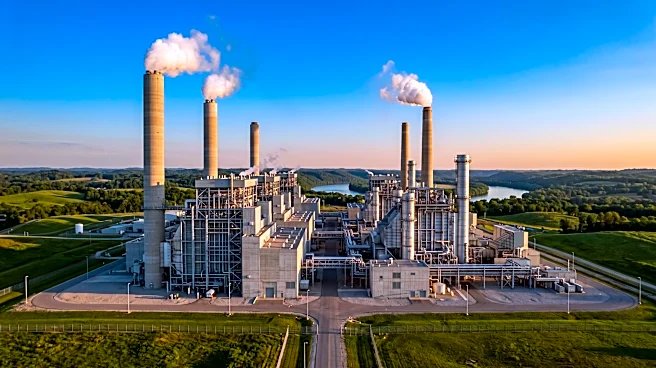
A federal appeals court has ruled that the Department of Energy (DOE) overstepped its authority by using emergency powers to keep the J.H. Campbell coal plant in West Olive, Michigan, operational. The plant was slated for retirement in May, but the Trump
administration intervened, citing potential grid outages and increased electricity demand from data centers as justification under the Federal Power Act. However, the D.C. Circuit Court rejected this reasoning, with Judge Cornelia Pillard stating that the emergency statute is a "narrow, last-resort backstop." This decision marks one of the first successful court challenges against President Trump's use of "energy emergency" powers. According to Grist, the plant's continued operation has resulted in significant environmental costs, including the release of approximately 1,000 tons of nitrogen oxides, 2,000 tons of sulfur dioxide, and 140 tons of particulate matter, and has incurred $259 million in costs that Consumers Energy seeks to recover from ratepayers.
Why It's Important?
This ruling is significant as it sets a precedent for limiting the federal government's ability to extend the life of polluting power plants under emergency declarations. It clarifies the scope of emergency powers under the Federal Power Act, indicating that broad claims of looming energy shortages are insufficient to justify keeping older fossil fuel plants online. According to Ted Kelly, director and lead counsel for U.S. Clean Energy at the Environmental Defense Fund, the decision narrows how the administration can use its "energy emergency" declaration, even if it doesn't cancel it. The financial implications are substantial, with Consumers Energy seeking to pass on $259 million in costs to ratepayers across Michigan and ten other states. Environmentally, the continued operation of such plants contributes to air pollution linked to various health issues and exacerbates climate change, making this ruling a win for environmental advocates and potentially for public health.
What's Next?
The immediate future for the J.H. Campbell coal plant remains uncertain, with environmental groups pushing for its permanent shutdown. The administration could seek a rehearing or appeal the decision to the Supreme Court, which could delay further action, according to Gavin McCabe, a senior litigator at the Natural Resources Defense Council. This ruling is also expected to influence other pending cases involving similar orders to keep fossil fuel plants running, as the legal issues overlap. Environmental groups hope that this decision will compel the administration to reconsider its reliance on emergency powers to bolster fossil fuel production and instead prioritize cleaner energy developments. The outcome of any further legal challenges will significantly shape the future of energy policy and the retirement of aging coal infrastructure in the U.S.
Beyond the Headlines
This court decision delves into the fundamental balance of power between the executive branch and the judiciary, particularly concerning the interpretation and application of emergency powers. It underscores the judiciary's role in scrutinizing executive actions, even those taken under the guise of national emergencies. The ruling also highlights the ongoing tension between energy security concerns, often framed around fossil fuel reliance, and environmental protection goals. The financial burden placed on ratepayers for keeping uneconomical and polluting plants operational raises ethical questions about who bears the cost of such policy decisions. This case could catalyze a broader re-evaluation of energy infrastructure planning, pushing for a more rapid transition to renewable energy sources and a more stringent application of environmental regulations, rather than relying on emergency declarations to prolong the life of fossil fuel assets.