




What's Happening?
A Cole County judge has ruled against placing a proposal on Missouri's November ballot that aimed to limit the legislature's ability to alter or repeal measures passed by initiative. Circuit Judge Daniel Green determined on Wednesday that the proposal,
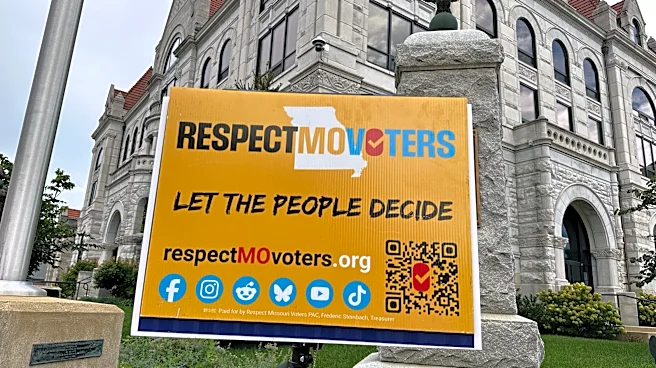
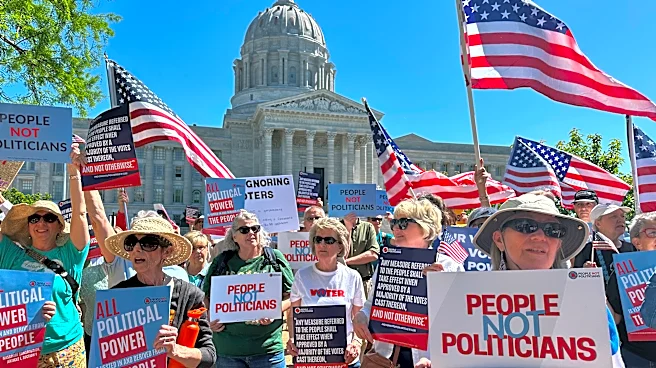
intended to be Amendment 6, violates the Missouri Constitution by combining multiple subjects and impermissibly restricting future legislative freedom. The initiative sought to protect citizen-led laws and constitutional amendments passed since January 1, 2010, by requiring an 80% majority vote from lawmakers to change them. Secretary of State Denny Hoskins had previously blocked the proposal, citing its violation of the third section of Missouri's Bill of Rights, which grants citizens the right to abolish or significantly change the state government. The judge upheld Hoskins' decision, stating that the initiative's text did not adequately inform voters of its substantial changes, which would affect areas like Medicaid expansion, right to work, and marijuana laws. The political action committee Respect MO Voters, which gathered 335,000 signatures for the initiative, has appealed the decision.
Why It's Important?
This ruling is significant for Missouri's legislative process and the balance of power between citizen initiatives and the state legislature. If upheld, it reinforces the principle that current voters cannot strip future voters of their right to consider amendments proposed by the General Assembly, preventing the insulation of current policy preferences from future reconsideration. The proposal's intent to require an 80% legislative majority to modify voter-approved measures would have drastically altered how laws are enacted and changed in Missouri, potentially making it much harder for the legislature to respond to evolving societal needs or correct unforeseen consequences of initiatives. The judge's emphasis on the proposal's multi-subject nature and lack of clear voter notification highlights concerns about transparency and the potential for initiatives to mislead the public. This decision could set a precedent for how future ballot initiatives are scrutinized for constitutional compliance and clarity, impacting the efficacy of direct democracy in the state.
What's Next?
Respect MO Voters has immediately appealed Circuit Judge Daniel Green's decision to the Western District Court of Appeals. The Missouri Supreme Court has already indicated it will transfer the appeal from the appeals court, suggesting a swift resolution is anticipated. The appeal process must conclude by September 8, which is the final day for courts to add measures to the November ballot. The outcome of this appeal will determine whether Missouri voters will have the opportunity to consider Amendment 6 in the upcoming election. If the higher courts uphold Judge Green's ruling, the proposal will not appear on the ballot, maintaining the current legislative framework for amending or repealing voter-approved initiatives. Conversely, a reversal would allow the measure to proceed, potentially leading to a significant shift in the legislative landscape of Missouri. Stakeholders, including political leaders and advocacy groups, will be closely watching the appeal's progress, as the final decision will have lasting implications for the state's governance.
Beyond the Headlines
The legal battle over this ballot initiative delves into fundamental questions about the nature of representative democracy versus direct democracy and the limits of citizen-led legislative efforts. The judge's ruling, particularly his assertion that 'today’s voters cannot strip that right from future voters to insulate the current majority’s policy preferences from future reconsideration,' underscores a critical legal and philosophical tension. While initiatives are designed to empower citizens, this case highlights the potential for such measures to inadvertently create legislative rigidity or entrench specific policies, thereby limiting the adaptability of future elected bodies. The debate also touches upon the ethical responsibility of initiative proponents to ensure that ballot language is clear and comprehensive, avoiding 'sweeping reforms affecting multiple provisions' without explicit voter awareness. This situation could prompt broader discussions about the drafting and review processes for ballot initiatives nationwide, aiming to strike a balance between citizen empowerment and maintaining a flexible, responsive legislative system.