




What's Happening?
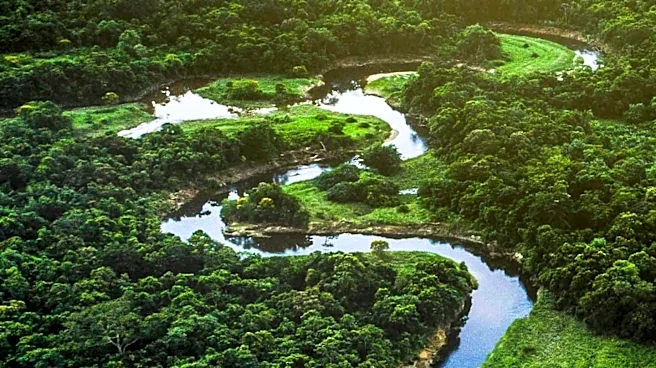
Brazil has experienced a significant loss of native vegetation, with an area more than twice the size of France being deforested over the past four decades. This reduction in vegetation has heightened the country's vulnerability to extreme weather events
associated with the El Niño phenomenon. According to a study by MapBiomas, native vegetation that once covered 79% of Brazil's territory now only covers 65%. The Amazon rainforest and the Cerrado savanna have been the most affected, with much of the land being converted for agriculture and livestock farming. This change in land use has made these areas more susceptible to weather extremes, such as droughts and floods, during El Niño events. The study highlights that deforested areas in the Amazon have experienced a more significant drop in rainfall compared to forested areas during the 2023-2024 El Niño.
Why It's Important?
The deforestation in Brazil poses a significant threat not only to the local environment but also to global climate stability. The loss of native vegetation reduces the region's ability to absorb carbon dioxide, exacerbating climate change. Additionally, the increased vulnerability to extreme weather events can have severe economic and social impacts, particularly on agriculture, which is a major part of Brazil's economy. The changes in rainfall patterns and increased frequency of droughts and floods can lead to crop failures, affecting food security and livelihoods. Furthermore, the destruction of biodiversity-rich areas like the Amazon and Cerrado can lead to the loss of countless species and disrupt ecological balance.
What's Next?
Brazil faces the challenge of balancing economic development with environmental conservation. The government and environmental organizations need to implement policies that promote sustainable land use and protect remaining native vegetation. There is also a need for international cooperation to address the global implications of deforestation and climate change. Monitoring and enforcement of environmental regulations will be crucial in mitigating the impacts of future El Niño events and preserving Brazil's natural heritage.