



What's Happening?
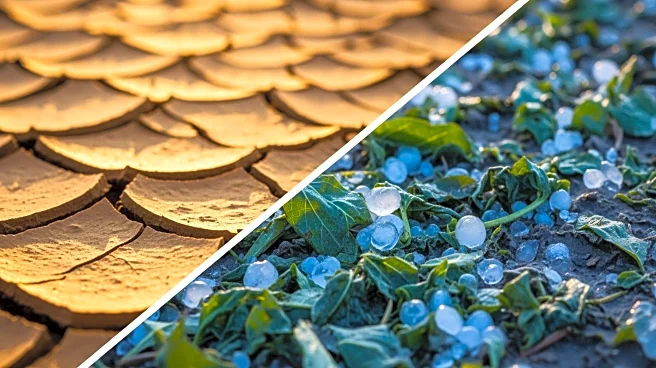
In 2025, Brazilian agriculture is facing significant challenges due to erratic weather conditions. A severe hailstorm in Leopoldo de Bulhões, Goiás, destroyed 230 hectares of soybeans, forcing farmers to replant and delaying the harvest until April 2026.
Meanwhile, a drought in Iporá, also in Goiás, led to a state of public calamity, disrupting planting schedules and increasing uncertainty about crop productivity. The National Supply Company (Conab) forecasts a production of 354 million tons of grain for the 2025/26 harvest, despite these adversities. However, corn production is expected to fall short of the record set in 2025, as the weather continues to pose challenges.
Why It's Important?
The adverse weather conditions in Brazil highlight the vulnerability of agriculture to climate change, impacting both local and global food supply chains. The destruction of crops and delayed planting can lead to increased costs for farmers and potential shortages in the market. This situation underscores the need for adaptive strategies in agriculture to mitigate the effects of climate variability. The projected decrease in corn production could affect global markets, as Brazil is a major exporter. The challenges faced by Brazilian farmers also reflect broader concerns about food security and the resilience of agricultural systems in the face of climate change.
What's Next?
As Brazilian agriculture continues to grapple with climate challenges, stakeholders may need to invest in more resilient farming practices and technologies to adapt to changing weather patterns. The government and agricultural organizations might focus on developing infrastructure and policies to support farmers in mitigating climate risks. Additionally, the global agricultural market will be closely monitoring Brazil's production levels, as any significant changes could influence international trade and pricing. The situation calls for increased collaboration between farmers, policymakers, and researchers to ensure sustainable agricultural practices.
Beyond the Headlines
The ongoing climate challenges in Brazil's agriculture sector may prompt a reevaluation of current farming practices and policies. There is a growing need for innovative solutions, such as drought-resistant crop varieties and improved water management systems, to enhance resilience. The situation also raises ethical considerations about the responsibility of developed nations to support developing countries in adapting to climate change. Long-term, these challenges could drive shifts in global agricultural production patterns, with potential implications for food security and economic stability.