
What's Happening?
A 120 million-year-old fossil discovered in northwestern China has unveiled a new species of microraptor, named Jian changmaensis. This discovery expands the known geographical range of microraptors, which
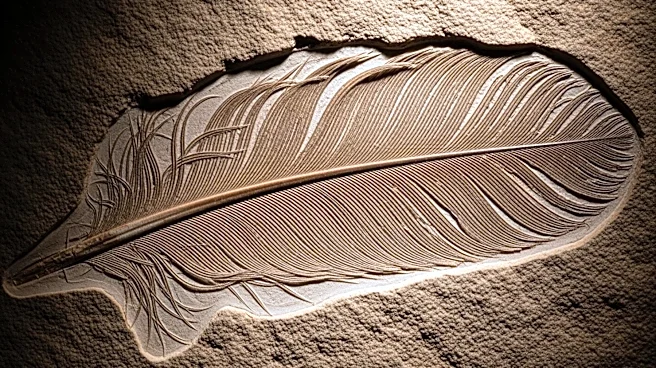
are smaller, gliding relatives of the velociraptor. The fossil, found in the Changma Basin, is the first microraptor specimen discovered outside northeastern China. The research, published in the Annals of Carnegie Museum, highlights the birdlike characteristics of Jian changmaensis, which had long feathers on both its arms and hind legs, suggesting it could glide between trees. The study provides new insights into the origins of avian flight, as microraptors are closely related to the ancestors of modern birds.
Why It's Important?
The discovery of Jian changmaensis offers critical information on the biological history of the Changma region and the ecological context of the ancestors of today's birds. It enhances understanding of how microraptors used their wings, contributing to the study of avian flight evolution. This finding also blurs the line between dinosaurs and early birds, as microraptors share characteristics with both groups. The research could lead to further exploration of the evolutionary transition from dinosaurs to birds, providing a deeper understanding of the development of flight in vertebrates.