









What's Happening?
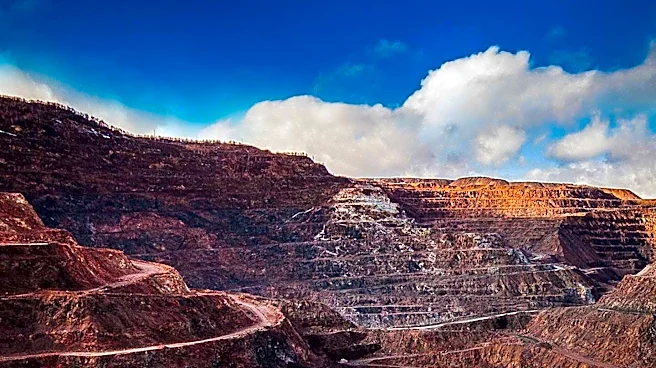
Protests have erupted at Rio Tinto Group's Oyu Tolgoi copper mine in Mongolia, leading to a blockade of a key road used for transporting copper concentrate to China. The protest began at 9 am local time, preventing trucks from moving the concentrate,
which could result in significant disruptions to the State budget and damage Mongolia's mining sector reputation. The mine, operated by Rio Tinto with a 66% stake, is crucial for the company's strategy to increase sales of copper, a metal essential for the energy transition. The Mongolian government owns the remaining stake in the mine. The protests' cause is unclear, but the mine has been controversial in Mongolia, with the government seeking a larger share of the revenue.
Why It's Important?
The disruption at Oyu Tolgoi could have significant economic implications for both Rio Tinto and Mongolia. As one of the world's largest copper projects, the mine is vital for Rio Tinto's growth strategy in the copper market, which is increasingly important for renewable energy technologies. For Mongolia, the mine's output represents a substantial portion of its GDP, and any prolonged disruption could impact the country's economic stability. The protests highlight ongoing tensions between the Mongolian government and Rio Tinto over revenue sharing, which could affect future foreign investments in the region.
What's Next?
If the blockade continues, Rio Tinto may face challenges in meeting its contractual obligations, potentially leading to financial penalties or renegotiations. The Mongolian government might need to engage with the protesters to resolve the underlying issues, possibly revisiting the terms of their agreement with Rio Tinto. The situation could also prompt other mining companies to reassess their operations in Mongolia, considering the potential for similar disruptions.