





What's Happening?
Renato Sales Heredia, Mexico's former national security commissioner, has disclosed previously unknown details regarding the capture and extradition of Joaquín 'El Chapo' Guzmán. In an interview for the podcast 'Penitencia,' Sales clarified aspects of the 2016
operation that led to Guzmán's arrest in Los Mochis, Sinaloa, and his subsequent extradition to the United States in January 2017. Sales stated that the initial police encounter was not a targeted search for Guzmán but rather a response to a stolen red Ford Focus. Guzmán and his associate, Jorge Iván Gastélum, 'El Cholo Iván,' had stolen the vehicle after abandoning a previously stolen Jetta. When confronted by federal police, Guzmán reportedly revealed his identity after 'El Cholo Iván' failed to negotiate their release. Sales also corrected a scene depicted in the Netflix production 'La Captura,' noting that the instruction for an officer to handcuff himself to Guzmán to prevent separation occurred at the airport, not in a motel room as portrayed. Furthermore, Sales revealed that a 'black code' protocol, involving a power outage, was activated to prevent Guzmán's lawyer from intervening and delaying the extradition process when he arrived at the prison.
Why It's Important?
These revelations from a high-ranking former Mexican official offer critical insights into the operational complexities and strategic decisions made during a pivotal moment in the U.S.-Mexico fight against organized crime. The details underscore the challenges faced by law enforcement in apprehending and securing high-profile drug lords, highlighting the constant threat of escape and legal maneuvers. For the U.S., Guzmán's capture and extradition were significant victories, as he was considered one of the most powerful and dangerous drug traffickers, responsible for a vast network of illicit drug distribution into the country. The information about the 'black code' and the measures taken to ensure extradition demonstrate the extraordinary lengths to which authorities went to prevent Guzmán from evading justice, reflecting the high stakes involved. Understanding these behind-the-scenes actions can inform future strategies in international law enforcement cooperation and the pursuit of justice against transnational criminal organizations that impact U.S. national security and public health.
What's Next?
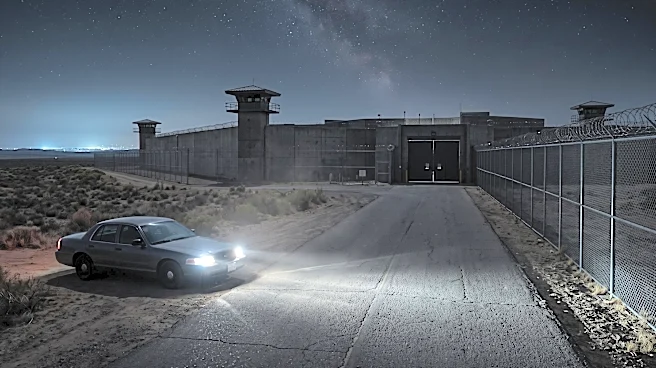
While Joaquín 'El Chapo' Guzmán is currently serving a life sentence in a U.S. supermax prison, the ongoing public discourse and revelations from former officials like Renato Sales Heredia continue to shape the narrative surrounding his legacy and the broader fight against drug cartels. These new details may prompt further scrutiny of past operations and potentially influence future policy discussions on cross-border crime and extradition protocols between the U.S. and Mexico. The information could also contribute to historical analyses of drug trafficking and law enforcement tactics, potentially leading to academic studies or documentaries that delve deeper into the intricacies of such high-stakes operations. For the Mexican government, these disclosures might reignite debates about transparency and accountability in past security operations. The continued interest in Guzmán's story, fueled by such revelations, ensures that his impact on both U.S. and Mexican society remains a subject of ongoing examination.
Beyond the Headlines
The narrative surrounding 'El Chapo' Guzmán extends beyond his criminal activities, touching upon complex societal perceptions. Despite his role in thousands of deaths and extensive drug trafficking, some in his home state of Sinaloa view him as a modern-day Robin Hood, crediting him with local infrastructure development like schools and roads. This dual perception highlights the intricate relationship between powerful criminal figures and local communities, where economic influence can sometimes overshadow criminal culpability. The revelations also shed light on the sophisticated methods employed by cartels to evade capture and the equally sophisticated counter-measures by law enforcement, including the use of 'black codes' to circumvent legal challenges. This ongoing struggle between criminal enterprises and state authority raises ethical questions about the balance between due process and national security, particularly in cases involving individuals with immense power and resources. The enduring fascination with Guzmán's story, as evidenced by media productions and public interest, reflects a broader societal grappling with issues of crime, justice, and the allure of anti-heroes.