







What's Happening?
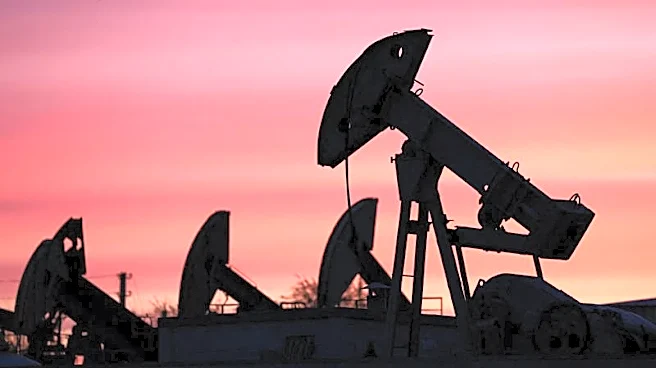
The ongoing conflict in the Middle East has significantly impacted global oil demand, reducing it by 1.6 million barrels per day, according to ING commodity analysts. This reduction is a consequence of the disruption in oil supply, which has been estimated
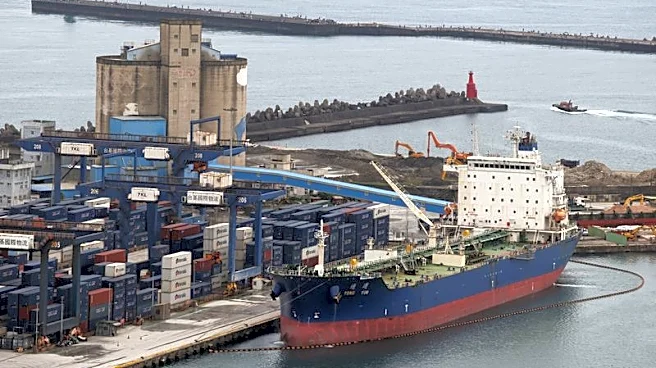
at between 13 million and 14 million barrels per day. The situation has been exacerbated by the breakdown of talks between the United States and Iran, with President Trump reportedly rejecting Iran's proposal to reopen the Strait of Hormuz. This has led to a prolonged supply disruption, causing oil prices to surge. Brent crude recently traded at $123.83 per barrel, while West Texas Intermediate was at $109.56 per barrel. The conflict has also prompted Iran to issue warnings of potential military action against the U.S. blockade of Iranian vessels in the Persian Gulf.
Why It's Important?
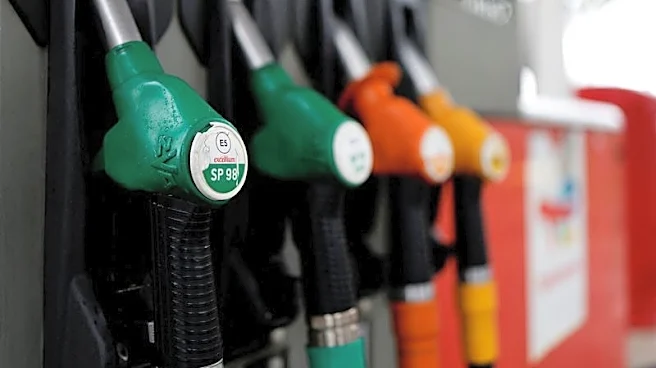
The reduction in oil demand and the surge in prices have significant implications for the global economy, particularly for countries heavily reliant on oil imports. The prolonged disruption in oil supply could lead to increased energy costs, affecting industries and consumers alike. As countries begin to deplete their oil inventories, prices may rise further, potentially leading to economic instability. The situation also highlights the geopolitical tensions in the region, with the potential for further escalation if diplomatic solutions are not reached. The U.S. and its allies may face increased pressure to find alternative energy sources or negotiate a resolution to prevent further economic fallout.
What's Next?
If the conflict continues without resolution, countries may need to explore alternative energy sources or increase domestic production to mitigate the impact of reduced oil supply. The U.S. and Iran may face international pressure to resume negotiations to reopen the Strait of Hormuz and stabilize the oil market. Additionally, countries may need to implement measures to conserve energy and manage rising costs. The situation could also lead to shifts in global alliances and trade relationships as nations seek to secure stable energy supplies.
Beyond the Headlines
The ongoing conflict and its impact on oil demand underscore the vulnerability of global energy markets to geopolitical tensions. It raises questions about the sustainability of current energy policies and the need for diversification in energy sources. The situation also highlights the potential for military conflicts to disrupt global supply chains and the importance of diplomatic efforts in maintaining stability. Long-term, this could accelerate the transition to renewable energy sources as countries seek to reduce dependence on volatile oil markets.