



What's Happening?
The U.S. State Department has mandated a partial evacuation of nonessential staff and their families from the U.S. Embassy in Beirut, Lebanon. This decision comes in response to escalating tensions in the region, particularly concerning President Trump's
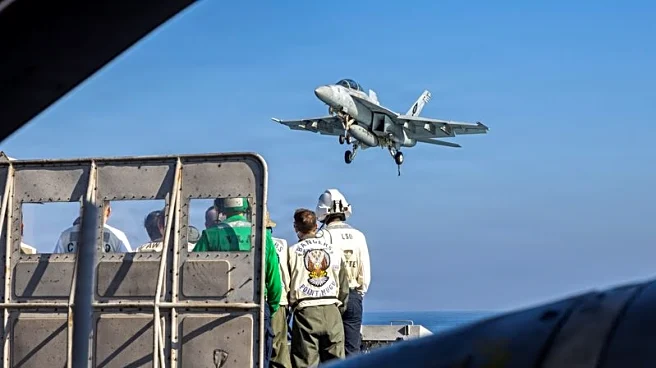
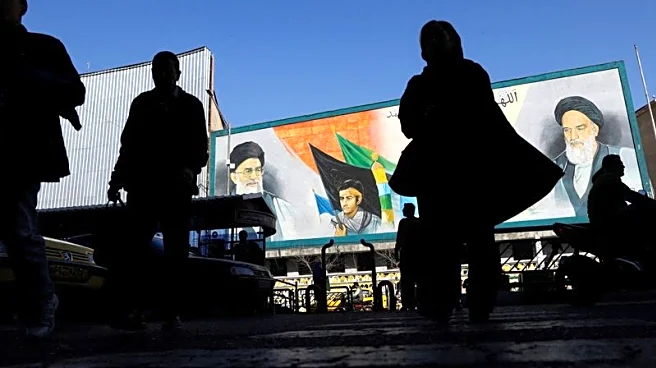
threats of a potential military strike against Iran. The move is part of a broader strategy to apply pressure on Iran to comply with U.S. demands regarding its nuclear program. The evacuation reflects heightened security concerns as the U.S. seeks to protect its personnel from potential retaliatory actions or instability in the region. The situation underscores the fragile geopolitical climate in the Middle East, where diplomatic and military maneuvers continue to shape the landscape.
Why It's Important?
This evacuation order highlights the serious nature of the current U.S.-Iran tensions and the potential for conflict escalation. The decision to withdraw embassy staff underscores the U.S. government's assessment of increased risk in Lebanon, a country that has historically been affected by regional conflicts. The move could impact diplomatic relations and operations in the region, as well as signal to Iran and other international actors the seriousness of the U.S. stance. For U.S. foreign policy, this action represents a strategic positioning that could influence negotiations and diplomatic engagements with Iran and other Middle Eastern countries. The evacuation also raises concerns about the safety and stability of U.S. personnel abroad, potentially affecting future diplomatic missions.
What's Next?
The partial evacuation may lead to further diplomatic actions or military posturing by the U.S. and its allies. The international community will likely monitor the situation closely, with potential responses from Iran and other regional players. The U.S. may engage in further diplomatic efforts to de-escalate tensions or prepare for possible military interventions. Additionally, the situation could prompt discussions within the U.S. government and among its allies about the broader implications for Middle Eastern stability and security. The outcome of these developments could significantly influence U.S. foreign policy and its approach to handling nuclear negotiations with Iran.