





What's Happening?
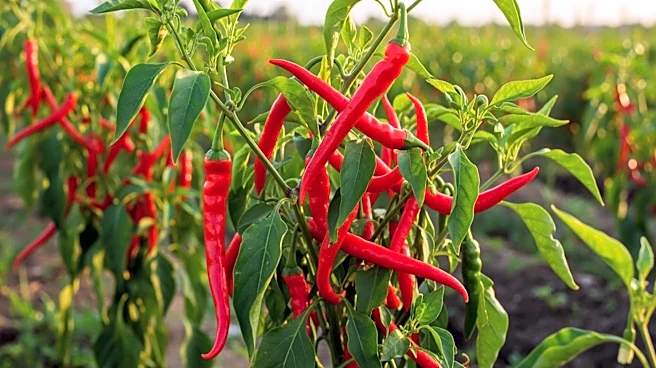
In the southern Indian state of Tamil Nadu, women farmers are predominantly responsible for the cultivation of chile peppers, a labor-intensive crop that requires meticulous hand-picking and sorting. The demanding nature of the work, coupled with its
seasonal aspect, discourages men from participating, leaving women to take on the task. This work provides crucial income for their households, sustaining them throughout the year. The cultivation process involves sowing seeds during the monsoon season and harvesting from January to May. Despite the challenges, including the risk of crop damage from untimely rains, women farmers continue to play a vital role in the agricultural sector, with over 70% of activities in the region carried out by them.
Why It's Important?
The predominance of women in chile pepper farming highlights the gender dynamics in rural agricultural labor, where men often opt for roles involving financial management, leaving physically demanding tasks to women. This situation underscores the economic reliance on women’s labor in rural communities, where their contributions are essential for household survival. The challenges faced by these women, such as lack of access to loans due to land ownership issues, reflect broader systemic barriers in agriculture. Their resilience and adaptation, including intercropping and informal banking groups, demonstrate innovative strategies to overcome economic hardships and ensure sustainability.