






What's Happening?
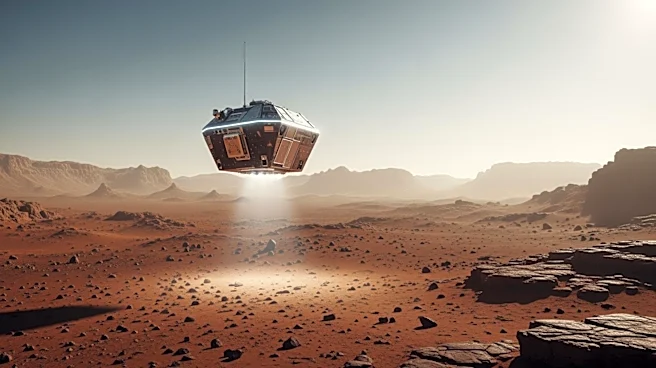
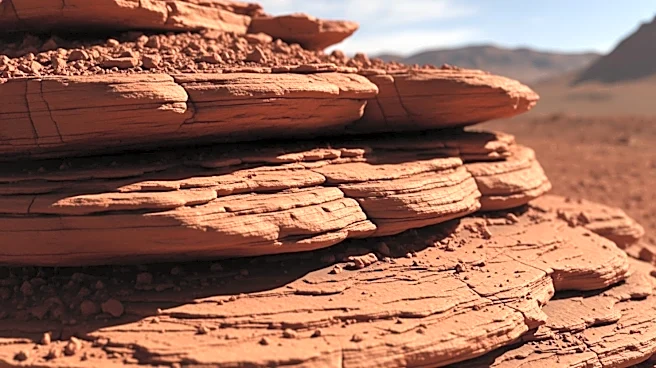
NASA's Curiosity rover is conducting a detailed survey of rock formations on Mars, specifically focusing on the bands of exposed rocks on Mount Sharp. During sols 4920 to 4926, the rover examined various rock textures and tonal differences, using its
suite of scientific instruments to gather data. The rover's activities included analyzing bedrock targets with its APXS chemistry and MAHLI micro-imaging tools, as well as performing LIBS spectroscopy with ChemCam. Curiosity also captured Mastcam mosaics of the surrounding terrain, including notable features like the 'Miraflores' butte. The mission faced a challenge when a data downlink delay prevented the planning of further drives and in situ examinations, but the team adapted by focusing on environmental studies and preparing for the next phase of exploration.
Why It's Important?
The Curiosity rover's exploration of Martian rock formations provides critical insights into the planet's geological history and environmental conditions. By studying the composition and structure of these rocks, scientists can infer past water activity and climate changes on Mars, which are essential for understanding the planet's potential to support life. The data collected by Curiosity contributes to the broader goals of Mars exploration, including the search for signs of past life and the assessment of the planet's habitability. This research also informs future missions, such as the Mars Sample Return program, by identifying promising sites for sample collection.
What's Next?
With the delayed data now available, the Curiosity team plans to continue its ascent of Mount Sharp, targeting a new band of smooth-textured, light-toned rocks. This next phase will involve further analysis of the geological features and continued environmental monitoring. The rover's findings will help refine models of Mars' geological processes and guide the selection of future exploration targets. As Curiosity progresses, it will continue to provide valuable data that enhances our understanding of Mars and supports the planning of human missions to the Red Planet.