



What's Happening?
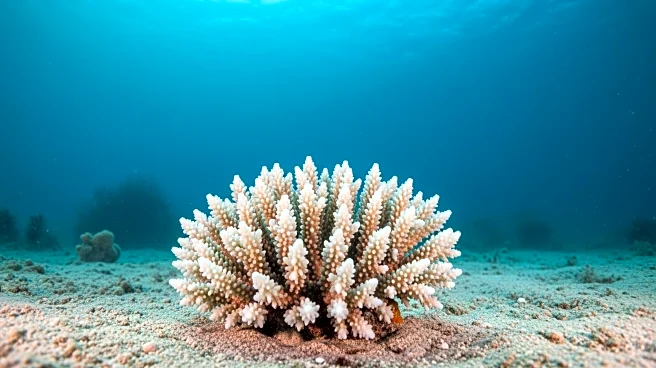
The 2014-2017 global coral bleaching event, driven by marine heatwaves, resulted in significant damage to coral reefs worldwide. According to a comprehensive analysis of 15,066 reef surveys, 80% of the surveyed reefs experienced moderate or greater bleaching,
while 35% reported moderate or greater coral mortality. This event, known as the Third Global Coral Bleaching Event, was characterized by unprecedented levels of heat stress, which were monitored using satellite data from the U.S. National Oceanic and Atmospheric Administration. The study highlights the severe impact of ocean warming on coral ecosystems, with predictions indicating that 51% of the world's coral reefs suffered moderate or greater bleaching during this period.
Why It's Important?
The findings underscore the vulnerability of coral reefs to climate change and the increasing frequency of marine heatwaves. Coral reefs are vital to marine biodiversity, providing habitat for numerous species and supporting fisheries and tourism industries. The widespread bleaching and mortality observed during this event could have long-term ecological and economic consequences, affecting food security and livelihoods in regions dependent on healthy coral ecosystems. The study also emphasizes the need for global efforts to mitigate climate change and protect these critical marine environments from further degradation.
What's Next?
Future efforts will likely focus on enhancing coral resilience through conservation and restoration initiatives. Scientists and policymakers may prioritize the development of strategies to reduce local stressors on reefs, such as pollution and overfishing, while also addressing the broader issue of climate change. Continued monitoring and research will be essential to understand the evolving impacts of ocean warming on coral reefs and to inform adaptive management practices.
Beyond the Headlines
The event highlights the ethical and environmental responsibility of global communities to address climate change. The loss of coral reefs not only threatens marine biodiversity but also cultural and economic practices of coastal communities. The study calls for a reevaluation of current environmental policies and increased international cooperation to combat the root causes of climate change.