

What's Happening?
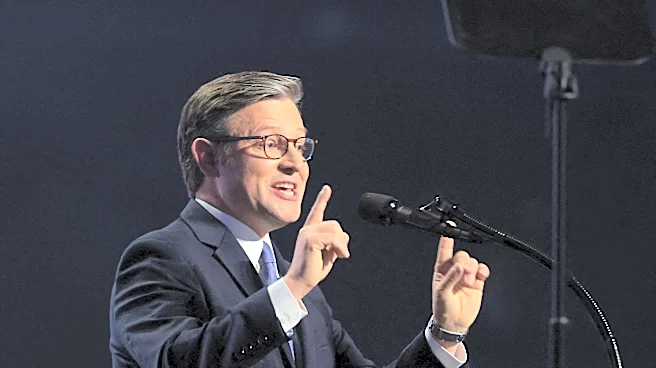
U.S. Representative Ro Khanna, Ranking Member of the House Select Committee on Strategic Competition Between the United States and the Chinese Communist Party, is set to propose a U.S.-China agreement focused on safety and monitoring standards for Artificial
Intelligence (AI). This initiative comes as the U.S.-China competition continues to influence the international landscape, raising critical questions about diplomacy, economic security, technology, and the management of strategic risks. Representative Khanna will present his proposal during an event hosted by the Asia Society, where he will also engage in a conversation with the Hon. Dr. Kevin Rudd AC, Global President and CEO of Asia Society and former Prime Minister of Australia. The discussion will center on strategies for managing sustained strategic competition, reducing conflict risks, identifying areas for practical cooperation, and navigating the roles of both nations in an increasingly competitive global environment.
Why It's Important?
This proposal is significant because it addresses the growing concerns surrounding AI development and its potential implications for global stability and security. The U.S.-China tech competition, particularly in AI, is a defining feature of current international relations, with both countries striving for technological leadership. An agreement on AI safety and monitoring standards could establish a crucial framework for responsible AI development, potentially mitigating risks associated with autonomous weapons, data privacy, and algorithmic bias. Such cooperation could also foster greater transparency and trust between the two superpowers, which is vital for preventing misunderstandings and unintended escalations in a highly sensitive technological domain. The initiative highlights a recognition that despite intense competition, there are shared interests in managing the inherent risks of advanced AI, which could have far-reaching societal and economic impacts globally.
What's Next?
Following Representative Khanna's proposal, the focus will be on the reception and potential progression of a U.S.-China agreement on AI safety and monitoring standards. The conversation with Dr. Kevin Rudd will likely explore the diplomatic avenues and challenges in achieving such an agreement, as well as the broader implications for U.S. strategy toward China. Key stakeholders, including policymakers, technology leaders, and international organizations, will be closely watching for any indications of willingness from both the U.S. and China to engage in formal discussions or negotiations on this proposal. The outcome could influence future bilateral relations, potentially setting a precedent for cooperation in other critical technological areas. The event itself, scheduled for September 21, 2026, will serve as a platform to gauge initial reactions and potential next steps for this significant diplomatic effort.
Beyond the Headlines
Beyond the immediate diplomatic implications, a U.S.-China agreement on AI safety could have profound ethical and cultural dimensions. It could initiate a global dialogue on the responsible development and deployment of AI, influencing international norms and standards. Such an agreement might also challenge the prevailing narrative of an inevitable technological arms race, suggesting that even in areas of intense competition, shared human values and the imperative to manage existential risks can drive cooperation. The long-term shift could be towards a more collaborative approach to global technological governance, where leading nations work together to establish guardrails for emerging technologies rather than solely pursuing unilateral advantage. This could redefine the nature of strategic competition, emphasizing risk reduction and shared responsibility alongside national interests.