

What's Happening?
North Dakota Governor Kelly Armstrong hosted a Diwali celebration at the Governor's Residence in Bismarck on October 29. This event marked the first time governors in several participating states, including North Dakota, have officially hosted Diwali celebrations
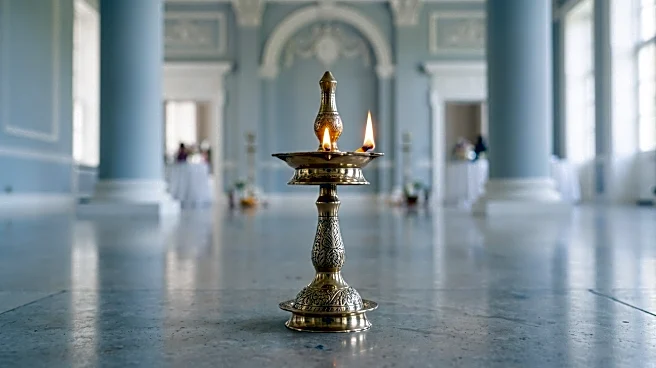
at their official residences or state capitols. Governor Armstrong, along with First Lady Kjersti Armstrong and the Indian Consul General, participated in a traditional lamp-lighting ceremony to mark the Hindu festival. During the celebration, Governor Armstrong highlighted the importance of cultural diversity, stating, “We should celebrate these relationships. We should celebrate these friendships. Diversity is our strength.” The event also served as a platform to discuss strengthening ties with India through trade, diplomacy, and state-level cooperation, underscoring the personal relationships that support these broader connections. This initiative is part of a broader trend of increased official recognition of the Indian American community's contributions across various U.S. states.
Why It's Important?
The hosting of Diwali celebrations by U.S. governors, including North Dakota's Governor Armstrong, signifies a growing recognition of the Indian American community's significant contributions to the nation's economy, public service, and cultural diversity. These events foster stronger cultural understanding and diplomatic ties between the U.S. and India at a sub-national level. For North Dakota, specifically, Governor Armstrong's emphasis on strengthening trade and diplomatic ties with India could open new avenues for economic cooperation, potentially benefiting local industries and businesses through increased trade and investment opportunities. Such engagements also serve to integrate diverse communities more fully into the civic and cultural fabric of the state, promoting inclusivity and mutual respect. The recognition of Diwali by state leaders underscores the evolving demographic landscape of the U.S. and the increasing influence of various diaspora communities.
What's Next?
Following these inaugural gubernatorial Diwali celebrations, it is likely that similar events will become a more regular feature in state-level calendars, further solidifying the recognition of Indian American contributions. The discussions initiated by Governor Armstrong regarding trade and diplomacy with India could lead to concrete state-level initiatives aimed at fostering economic partnerships. This might include trade delegations, cultural exchange programs, or agreements designed to facilitate business between North Dakota and India. Other states may observe the positive reception and outcomes of these celebrations, potentially inspiring more governors to host similar events in the future. This trend could also encourage greater political engagement and representation for the Indian American community, as their cultural heritage gains more prominent official acknowledgment.
Beyond the Headlines
The increasing official recognition of Diwali by U.S. governors reflects a broader societal shift towards embracing multiculturalism and acknowledging the diverse tapestry of American identity. Beyond mere celebration, these events carry deeper implications for international relations, particularly in strengthening soft power diplomacy between the U.S. and India. By engaging with cultural festivals, state leaders contribute to building goodwill and fostering deeper people-to-people connections, which can underpin more robust economic and strategic partnerships. This trend also highlights the growing political and economic influence of the Indian American diaspora, prompting political leaders to engage more directly with their cultural heritage. Such initiatives can also serve as a model for recognizing other diverse communities and their cultural contributions, promoting a more inclusive national narrative.